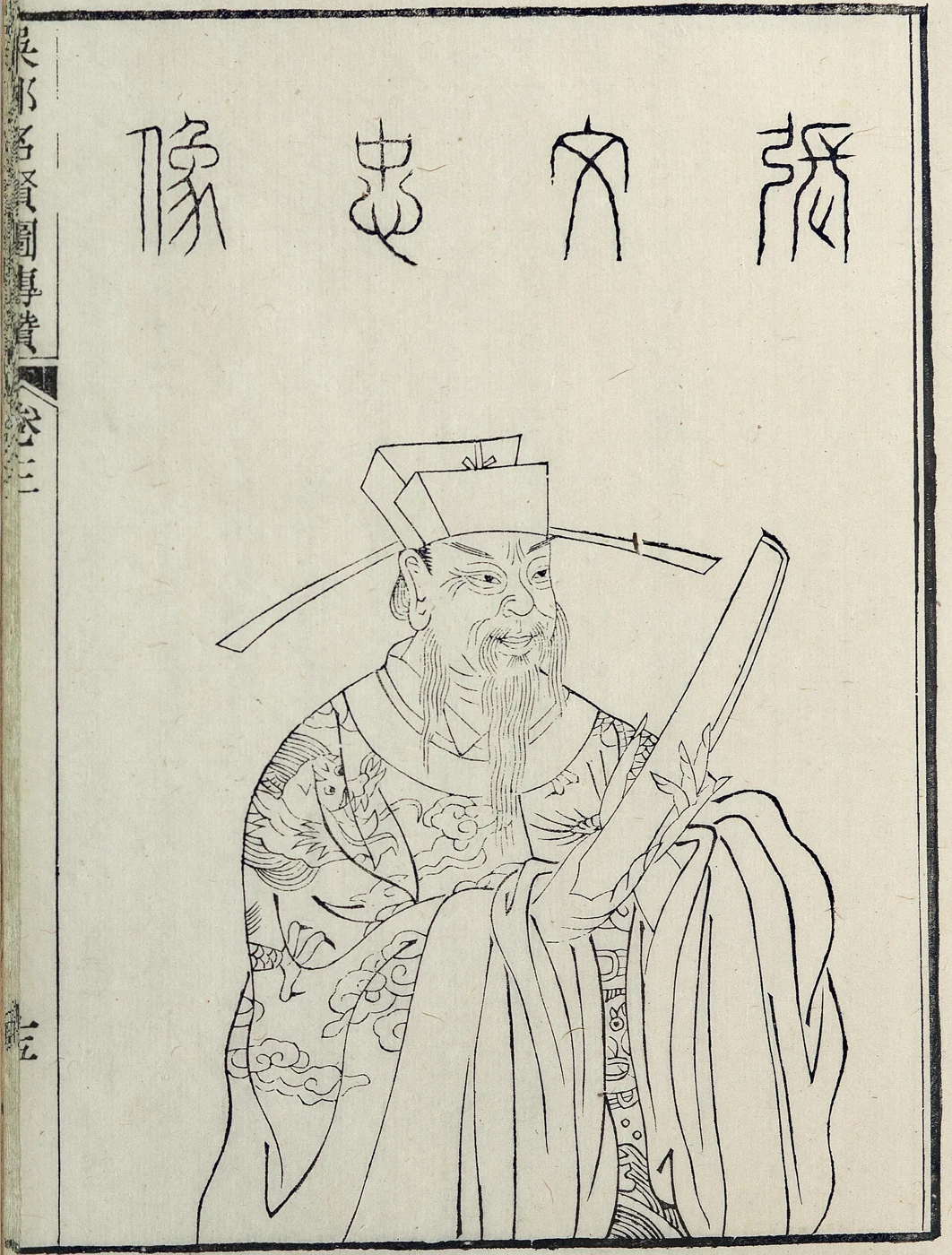
1217 CE–1279 CE
an outstanding general who resisted the Yuan in the late Southern Song
Zhang Shijie
张世杰
Zhang Shijie (died 1279 AD) was a native of Fanyang (modern Zhuozhou, Hebei). He was a paramount loyalist general, naval commander, and national hero in the closing years of the Southern Song Dynasty, commemorated alongside Wen Tianxiang and Lu Xiufu as one of the 'Three Heroes of the Late Song' . Entering Southern Song service in Huainan, he rose through the ranks due to conspicuous bravery, distinguishing himself during the…
1217 CE–1279 CESouthern Song
PROFILE
Zhang Shijie (died 1279 AD) was a native of Fanyang (modern Zhuozhou, Hebei). He was a paramount loyalist general, naval commander, and national hero in the closing years of the Southern Song Dynasty, commemorated alongside Wen Tianxiang and Lu Xiufu as one of the 'Three Heroes of the Late Song' . Entering Southern Song service in Huainan, he rose through the ranks due to conspicuous bravery, distinguishing himself during the Siege of Ezhou and the Battle of Jiaoshan. Following the fall of the capital Lin'an in 1276, Zhang Shijie escorted the young imperial princes Zhao Shi and Zhao Bing to Fuzhou, enthroning them and assuming supreme military leadership as Junior Guardian, Bureau of Military Affairs Commissioner, and Duke of Yue. He orchestrated a dogged naval resistance along the coastlines of Fujian and Guangdong for four years. In 1279, following the cataclysmic defeat at the Battle of Yamen, he broke through enemy cordons; encountering a devastating typhoon off Hailing Island, he burned incense to heaven and drowned in the surging waves, dying a martyr for the fallen dynasty.
- Era
- Ancient times
- Dynasty
- Ancient times
- Identity
- an outstanding general who resisted the Yuan in the late Southern Song
- Date of Birth
- Not recorded in historical sources
- Date of Death
- 1279
- Ethnicity
- Han
- Ancestral Home
- Fanyang
- Place of Birth
- Fanyang (modern Zhuozhou, Hebei)
- Place of Death
- Unknown
- Lifespan
- Unknown
- Peerage
- Duke of Yue
LIFE TIMELINE
Fanyang | Born in Fanyang; trained in archery and horsemanship, servinOpen
Fanyang | Born in Fanyang; trained in archery and horsemanship, serving initially under Jin-Mongol general Zhang Rou.
Huainan | Fled to Southern Song after a military infraction; enlisted Open
Huainan | Fled to Southern Song after a military infraction; enlisted as a junior squad leader under Commander Lü Wende.
Ezhou | Breached Kublai Khan's siege perimeter to reinforce besieged EOpen
Ezhou | Breached Kublai Khan's siege perimeter to reinforce besieged Ezhou, demonstrating fearless assault tactics.
Xiangyang, Huangzhou | Campaigned repeatedly along the Han and YangtzeOpen
Xiangyang, Huangzhou | Campaigned repeatedly along the Han and Yangtze rivers during the Siege of Xiangfan; promoted to Prefect of Huangzhou.
Jiaoshan, Lin'an | Mobilized volunteer armies to defend Lin'an; chaineOpen
Jiaoshan, Lin'an | Mobilized volunteer armies to defend Lin'an; chained thousands of warships at the Battle of Jiaoshan, suffering heavy fire-attack losses.
Fuzhou | Escorted imperial princes Zhao Shi and Zhao Bing to Fuzhou, eOpen
Fuzhou | Escorted imperial princes Zhao Shi and Zhao Bing to Fuzhou, enthroning Zhao Shi as Emperor Duanzong; appointed Military Commissioner.
Quanzhou | Requisitioned commercial merchant vessels in Quanzhou; mariOpen
Quanzhou | Requisitioned commercial merchant vessels in Quanzhou; maritime superintendent Pu Shougeng defected to the Mongols and slaughtered royal clansmen.
Guangzhou, Chaozhou | Led naval counter-offensives along the GuangdongOpen
Guangzhou, Chaozhou | Led naval counter-offensives along the Guangdong coast, recovering Guangzhou and being created Duke of Yue.
Yamen | Following Duanzong's death, enthroned young Zhao Bing at GangzOpen
Yamen | Following Duanzong's death, enthroned young Zhao Bing at Gangzhou; relocated headquarters to Yamen, chaining a thousand warships into a floating fortress.
Yamen Sea | Smashed by Yuan general Zhang Hongfan's joint naval offensOpen
Yamen Sea | Smashed by Yuan general Zhang Hongfan's joint naval offensive; rejected surrender demands conveyed by his own nephew.
Yamen | Song fleet collapsed; Chancellor Lu Xiufu leaped into the sea Open
Yamen | Song fleet collapsed; Chancellor Lu Xiufu leaped into the sea with the child emperor; Zhang Shijie severed chains to break through with surviving ships.
Hailing Island | Struck by a catastrophic typhoon off Hailing Island; Open
Hailing Island | Struck by a catastrophic typhoon off Hailing Island; prayed to heaven and drowned in the surging waves at an unconfirmed age.
Age 19 | ### The Maritime Court and Unyielding Struggle In February 12Open
Age 19 | ### The Maritime Court and Unyielding Struggle In February 1276 AD, Bayan's legions surrounded Lin'an, compelling Grand Empress Dowager Xie and the five-year-old Emperor Gong to surrender.
Age 19 | In May 1276, Zhang Shijie and Lu Xiufu proclaimed eleven-yearOpen
Age 19 | In May 1276, Zhang Shijie and Lu Xiufu proclaimed eleven-year-old Zhao Shi as Emperor Duanzong at Fuzhou, inaugurating the Jingyan reign era.
Age 19 | ### The Maritime Court and Unyielding Struggle In February 12Open
Age 19 | ### The Maritime Court and Unyielding Struggle In February 1276 AD, Bayan's legions surrounded Lin'an, compelling Grand Empress Dowager Xie and the five-year-old Emperor Gong to surrender.
Throughout 1277 AD | Throughout 1277 AD, Zhang Shijie maintained vigorOpen
Throughout 1277 AD | Throughout 1277 AD, Zhang Shijie maintained vigorous amphibious operations along the southern coast, defeating Yuan admiral Liu Shen and temporarily liberating Guangzhou and surrounding districts.
Age 10 | Throughout 1277 AD, Zhang Shijie maintained vigorous amphibioOpen
Age 10 | Throughout 1277 AD, Zhang Shijie maintained vigorous amphibious operations along the southern coast, defeating Yuan admiral Liu Shen and temporarily liberating Guangzhou and surrounding districts.
However | However, the child emperor succumbed to trauma and illness fOpen
However | However, the child emperor succumbed to trauma and illness following a shipwreck, dying at Gangzhou in April 1278.
Age 11 | However, the child emperor succumbed to trauma and illness foOpen
Age 11 | However, the child emperor succumbed to trauma and illness following a shipwreck, dying at Gangzhou in April 1278.
In January 1279 | In January 1279, Yuan supreme commander Zhang HongfaOpen
In January 1279 | In January 1279, Yuan supreme commander Zhang Hongfan arrived with elite northern amphibious armies, joined by general Li Heng from Guangzhou, completely blockading Yamen from sea and land.
Zhang Shijie (died 1279 AD) was a native of Fanyang (modern Zhuozhou |Open
Zhang Shijie (died 1279 AD) was a native of Fanyang (modern Zhuozhou | Zhang Shijie (died 1279 AD) was a native of Fanyang (modern Zhuozhou, Hebei).
In May 1279 | In May 1279, off the coast of Hailing Island near YangjiOpen
In May 1279 | In May 1279, off the coast of Hailing Island near Yangjiang, the fleet was engulfed by a catastrophic typhoon.
Age 12 | In January 1279, Yuan supreme commander Zhang Hongfan arrivedOpen
Age 12 | In January 1279, Yuan supreme commander Zhang Hongfan arrived with elite northern amphibious armies, joined by general Li Heng from Guangzhou, completely blockading Yamen from sea and land.
BIOGRAPHY
Major Activities
The Heroic Relief of Ezhou During Kublai Khan's siege of Ezhou in 1259 AD, Zhang Shijie served as the spearhead commander for Lü Wende's relief army. Leading several hundred shock cavalry through the teeth of Mongol artillery and naval cordons, he broke into the fortress, fighting on the ramparts for a hundred days to preserve the central Yangtze defensive line. ### Chained Warships at the Battle of Jiaoshan In 1275 AD, as Bayan's armies closed upon Lin'an, Zhang Shijie mobilized volunteer armies and interlocked thousands of warships across the Yangtze River at Jiaoshan. Though devastated by Yuan fireships and artillery, his heroic stand displayed unmatched tactical courage in defense of the imperial capital. ### Guarding the Maritime Court Across Four Years Following the surrender of Lin'an in 1276, Zhang Shijie refused to abandon the dynasty. Rescuing the young imperial princes, he enthroned Emperor Duanzong and Emperor Bing successively, organizing naval commands along the coasts of Zhejiang, Fujian, and Guangdong, preserving the Song imperial flame in the face of insurmountable odds. ### Martyrdom at Yamen and Hailing Island In the climactic Battle of Yamen in 1279, Zhang Shijie commanded 200,000 soldiers and civilians, rejecting three personal appeals to surrender. Breaking through the blockade, he drowned during a devastating typhoon off Hailing Island after offering his final prayer to heaven, taking his place among the immortal 'Three Heroes of the Late Song'.
Personal Relations
- Imperial Dowager: Empress Dowager Yang (Consort of Emperor Duzong; drowned herself after Yamen)
- The Three Heroes of the Late Song: - Lu Xiufu (Grand Chancellor of the Left, who leaped into the sea with the child emperor) - Wen Tianxiang (Grand Chancellor of the Right, captured at Haifeng)
- Early Military Mentor: Lü Wende (Military Commissioner of Huainan) ### Defectors and Opposing Generals - Treasonous Defector: Pu Shougeng (Superintendent of Maritime Trade at Quanzhou who defected and massacred royal clansmen)
- Yuan Grand Marshals: - Bayan (Grand Chancellor and supreme commander of the southern conquest) - Zhang Hongfan (Yuan Han Army Marshal, commander at Yamen, son of Zhang Rou) - Li Heng (Yuan naval commander at Yamen)
Historical Assessment
Official Dynastic Histories Tuotuo in *History of Song* (Volume 414):
"Chen Yizhong pursued retreating strategies, while Zhang Shijie occasionally committed tactical errors. Yet Shijie guarded the two young sovereigns through tempest and waves, his dedication to dynastic restoration unbending to the very end. The catastrophe at Jiaoshan and the devastation of Yamen were the decrees of heaven, beyond human remedy. When the typhoon wrecked his ship, he lit incense and prayed to heaven, dying with serene dignity. Truly, he sought righteousness and attained it! His incandescent loyalty places him side-by-side with Wen Tianxiang and Lu Xiufu as the Three Heroes of the Late Song, commanding universal reverence across thousands of years." *History of Yuan* (Volume 156, Biography of Zhang Hongfan):
"Records Zhang Shijie's answer to the envoys: 'I know full well that surrender guarantees life and riches, but my honor cannot be compromised! I would rather die here than live as an enslaved captive!'" ### Later Tributes - Wang Fuzhi in *On the Song Dynasty*: "Zhang Shijie traversed the maritime wilderness, suffering a hundred defeats without yielding, his sole aim being the preservation of Zhao rule. His immortal devotion shines beside the sun and moon."
- Koxinga (Zheng Chenggong) in his poems: Revered Zhang Shijie as the ultimate historical model of loyalist maritime resistance.
CONTEMPORARIES
Bibliography
- History of Song* (*Song Shi*), Volume 414: Biographies 173 (Biography of Zhang Shijie).
- History of Song*, Volume 47: Annals of the Two Young Sovereigns.
- History of Yuan* (*Yuan Shi*), Volume 156: Biography of Zhang Hongfan.
- Wang Fuzhi, *On the Song Dynasty* (*Song Lun*), Volume 14.
- Gu Cheng, *History of the Southern Ming*, Introduction on the Fall of the Song.