Offices through time
One stable term, with responsibilities and institutional change explained by dynasty.
DYNASTIC RIVER · 59 STATES
Major dynasties and concurrent states from Qin to Qing share one panorama. Every state in the Sixteen and Ten Kingdoms has its own named, dated stream.
Use the horizontal scrollbar to explore the panorama · Select a stream to open its entry
PEOPLE
 Ming Dynasty
Crown-prince official
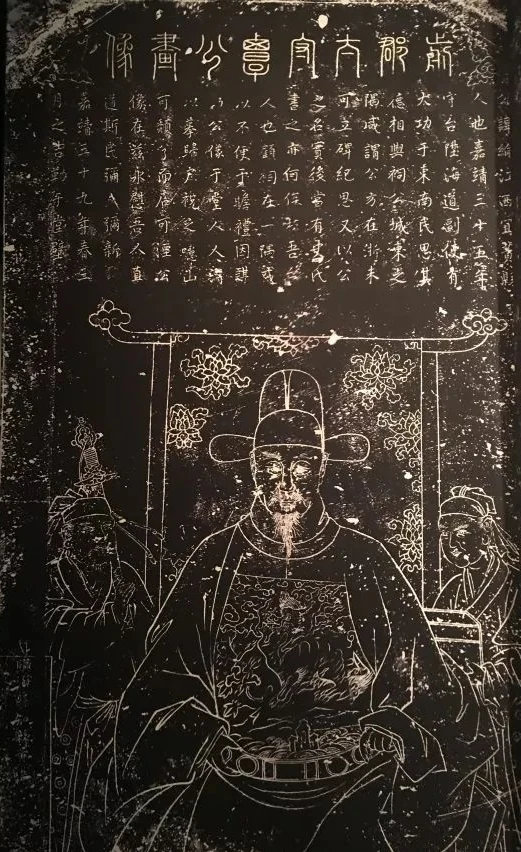
Tan Lun (1520–1577), courtesy name Zili and also Yizhao, art name Erhua, was a native of Tanfang in Yihuang, Jiangxi, with ancestral roots in Changsha, Huguang (present-day Hunan). He passed the metropolitan examination in 1544, the twenty-third year of the Jiajing era, and served through the Jiajing, Longqing, and Wanli reigns, ultimately becoming Minister of War. Tan Lun was a prominent Ming commander in the campai
Tang official and historian
An eyewitness to the Jinyang uprising and author of *Da Tang Chuangye Qiju Zhu*.
Chieftain of Qifu Xianbei
Qifu Sifan (birth year unknown – 376) was a prominent chieftain of the Qifu branch of the Xianbei people, supreme military commander, and foundational architect of the Western Qin dynasty during the Sixteen Kingdoms period. The son of chieftain Qifu Qiuji, he was the father of Qifu Guoren (founding Emperor Liezu of Western Qin) and Qifu Gangui (King Gaozu). Around 355, Qifu Sifan succeeded his father as tribal leader
 Northern Song
Empress
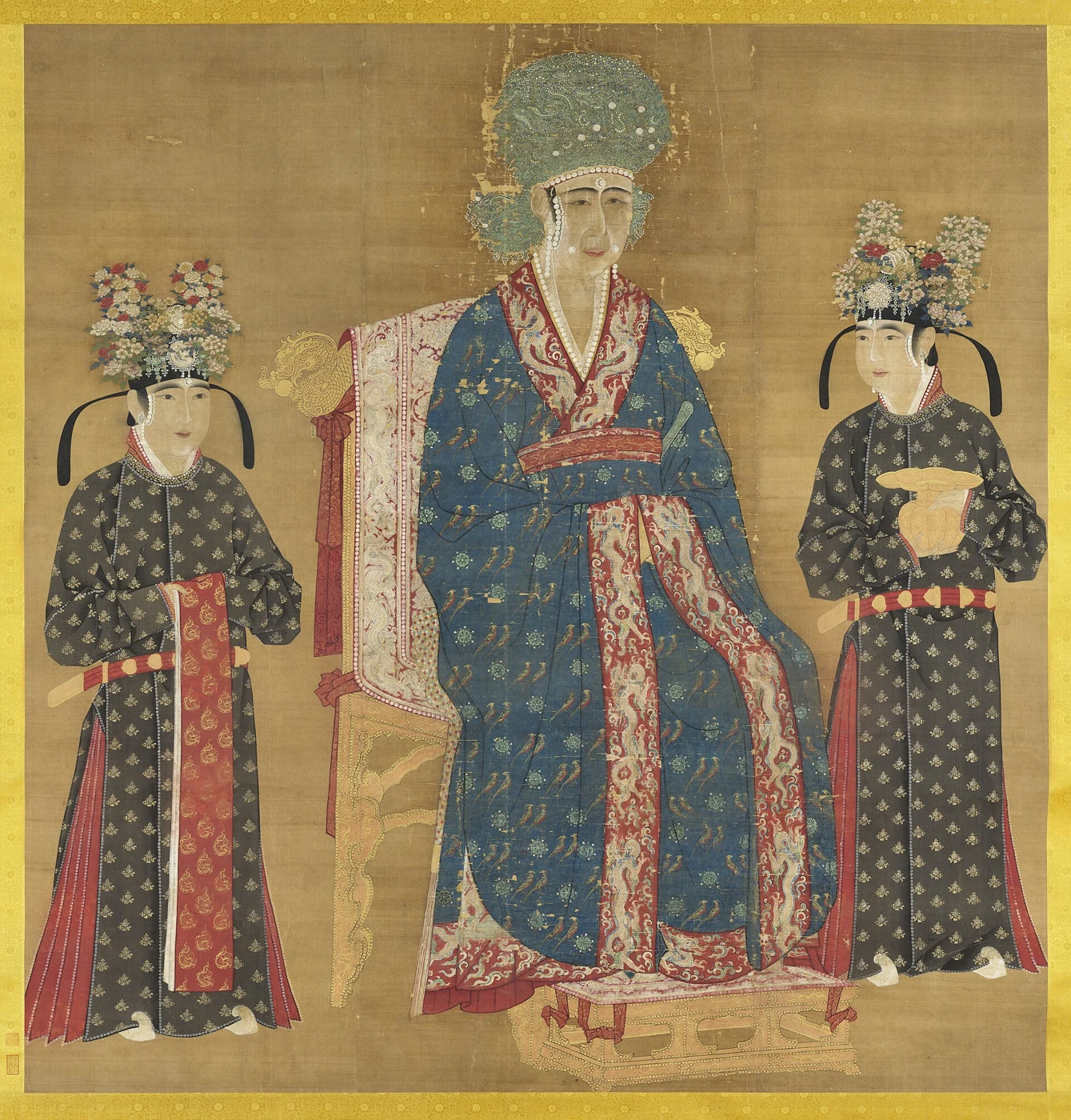
Empress Cao (1016–1079), native of Lingshou, Zhending (modern Hebei), was the second empress consort of Emperor Renzong of Song, the adoptive mother of Emperor Yingzong, and Grand Empress Dowager during the reign of Emperor Shenzong, posthumously honored as Empress Cisheng Guangxian. Descending from one of the most prominent military-aristocratic lineages of the early Northern Song, she was the granddaughter of found
General
Liu Daogui was a younger brother of Liu Yu and a general who helped his brother suppress the Huan Xuan Rebellion and lay foundations for Liu Song.
Emperor
Helian Bobo (381–425), originally named Liu Bobo and bearing the epithet Qujie, was a member of the Tiefu branch of the Xiongnu and a native of Shuofang County in Shuofang Commandery (north of present-day Jingbian County, Shaanxi). He was the founding emperor of the Hu Xia state during the Sixteen Kingdoms period, with the temple name Shizu and the posthumous title Emperor Wulie. His father Liu Weichen was a leader o
Historical figure
The Chinese source cache identifies this person as a emperor associated with Dali. This entry preserves the source-backed identity and records the available chronology without adding unsupported claims.
a noted general of the late Eastern Jin
Zang Xi (375 – 413 CE), courtesy name Yihe, a native of Ju County in Dongguan (present-day Ju County, Shandong), was an eminent military general and imperial consort aristocrat during the late Eastern Jin dynasty. Hailing from the distinguished Dongguan Zang lineage, he was the younger brother of Empress Wujing (Zang Aiqin, formal consort of Emperor Wu of Song) and the revered Confucian scholar Zang Tao. Though origi
Hydraulic Engineer
Chen Huang (1637–1688), courtesy name Tianyi and art name Shengzhai, was a native of Qiantang, Zhejiang (present-day Hangzhou; alternatively Jiaxing). He was an illustrious hydraulic engineer and river conservancy master of the Qing dynasty. Rejecting the rigid civil examination curriculum in his youth, he immersed himself in geography and water conservancy, later joining the secretarial staff of Director-General of
Writer and scholar
Sima Qian (145 BCE–87 BCE?), courtesy name Zichang, was a Western Han historian, writer, and thinker from Xiayang in Zuopingyi (present-day Hancheng, Shaanxi). He succeeded his father Sima Tan as Grand Historian and was later known as the “Taishigong.” Enduring severe humiliation, he completed *Records of the Grand Historian*, China's first general history written in the biographical-annalistic format, and later gene
 Southern Song
General
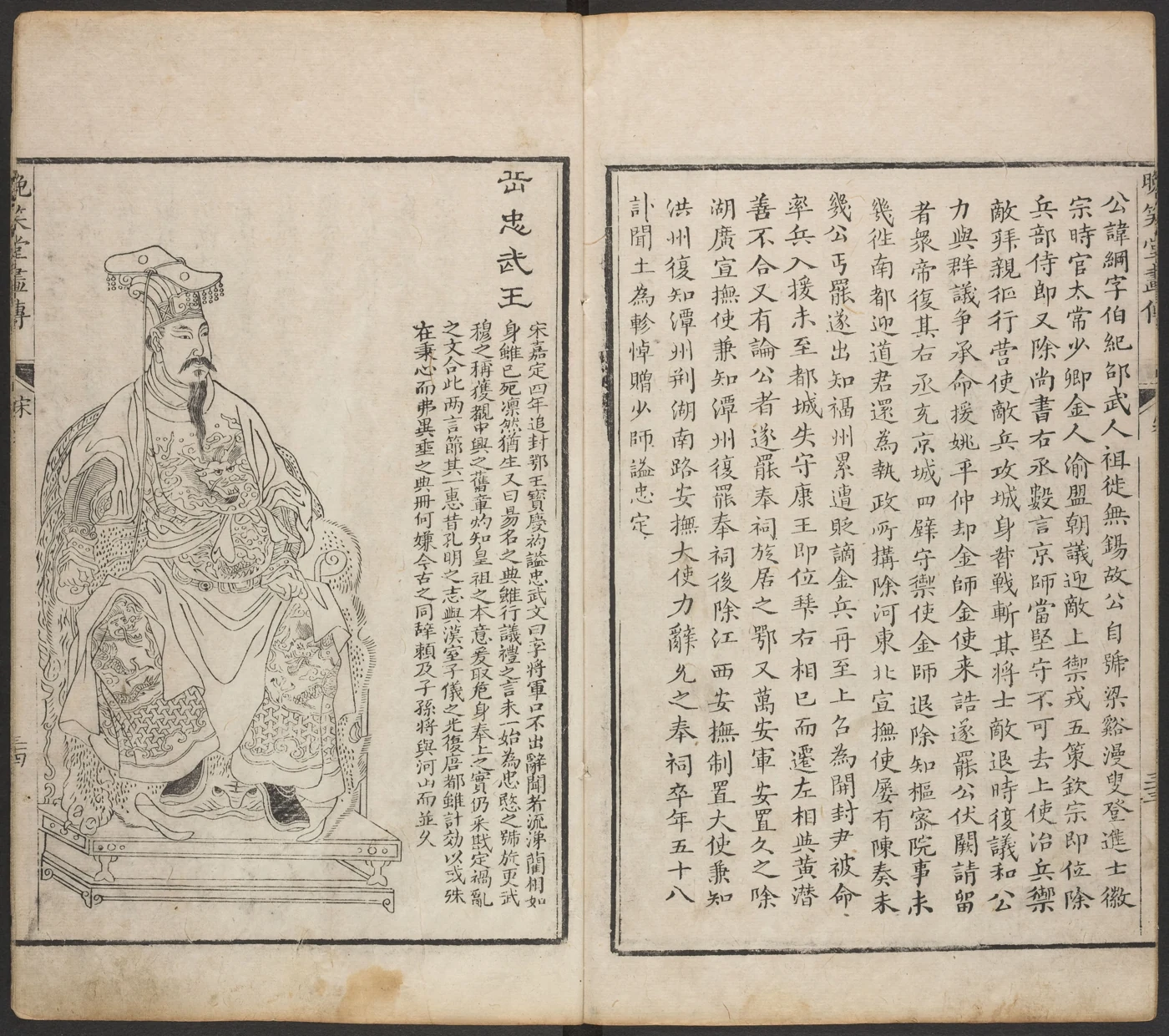
Yue Fei (March 24, 1103–January 27, 1142), courtesy name Pengju, was a native of Tangyin in Xiangzhou (present-day Tangyin, Henan), with ancestral roots in Dongchang (present-day Liaocheng, Shandong). He was a renowned Southern Song general who fought the Jin, as well as a military commander, strategist, calligrapher, and poet, and is remembered as a national hero. Born into a farming family, Yue entered military ser
 Northern Zhou
Military strategist
Wei Xiaokuan (509–December 19, 580), originally named Wei Shuyu and courtesy name Xiaokuan, by which he was commonly known, was from Duling in Jingzhao (present-day Xi'an, Shaanxi). He was a prominent military strategist of the Northern Wei, Western Wei, and Northern Zhou. He rose to Grand Minister of Works and Supreme Pillar of State, was created Duke of Yun, and received the posthumous name Xiang. A member of the e
HISTORICAL SCENES
The Yellow Turban Rebellion, also called the Yellow Turban Uprising or Yellow Turban revolt, was a large-scale peasant rebellion led by Zhang Jue, leader of the Way of Great Peace, in the late Eastern Han. It broke out in 184, the first year of the Zhongping era under Emperor Ling of Han, and took its name from the yellow headscarves worn by the rebels. The uprising lasted about nine months. Although it was suppresse
ChinaThe Kaiyuan era of prosperity, also known as the Kaiyuan-era prosperity, refers to the prosperous phase of the Tang Dynasty during the early reign of Emperor Xuanzong, Li Longji, in the Kaiyuan era (713–741). After taking the throne, Emperor Xuanzong employed capable Grand Councilors such as Yao Chong and Song Jing, reformed official administration, adjusted military and economic institutions, and promoted culture an
ChinaKublai Khan (23 September 1215–18 February 1294), a member of the Borjigin imperial lineage, was a grandson of Genghis Khan, the fourth son of Tolui, and a younger brother of Möngke. He founded the Yuan Dynasty, proclaimed the dynastic name “Great Yuan” in 1271, conquered the Southern Song in 1279, and unified China. During his reign he adopted Chinese administrative practices, strengthened central authority, and bui
See the event narrativeThe Dazexiang Uprising, also known as the Chen Sheng and Wu Guang uprising, was the first recorded large-scale uprising of commoners in Chinese history. In the autumn of 209 BCE, the first year of Qin Er Shi, Chen Sheng, Wu Guang, and more than nine hundred conscripted garrison troops were ordered to Yuyang on the northern frontier. On the way, heavy rain stopped them at Dazexiang in Qi County (southeast of present-d
ChinaThe Jingkang Incident, also known as the Jingkang Disaster, Jingkang Humiliation, Jingkang Calamity, or Jingkang Upheaval, refers to the Jin dynasty’s two invasions of the Northern Song from the seventh year of the Xuanhe era to the second year of the Jingkang era (the third to fifth years of the Jin Tianhui era, 1125–1127). Jin forces eventually captured the Northern Song capital of Dongjing, present-day Kaifeng in
ChinaThe Battle of Red Cliffs was a decisive battle in 208, the thirteenth year of the Jian'an era in the late Eastern Han, in which the allied forces of Sun Quan and Liu Bei defeated Cao Cao's army near Red Cliffs on the Yangtze River (northwest of present-day Chibi, Hubei). It is one of the best-known Chinese battles in which a smaller and weaker force defeated a larger one, and one of the most famous of the “three grea
ChinaEXPLORE MORE
One stable term, with responsibilities and institutional change explained by dynasty.
Names, locations, administrative roles, and urban change.
Painting, porcelain, poetry, and historically themed reading.