Biography
Family Background and Early Years
Wei Xiaokuan came from a distinguished Sanfu family. His grandfather Wei Zhenxi served as administrator of Fengyi and Fufeng under Northern Wei and was posthumously appointed Inspector of Jingzhou. His father Wei Xu rose to Right Assistant Director of the Department of State Affairs and Inspector of Southern Binzhou and was posthumously honored as Minister of Works with the posthumous name Wenhui. Wei Xiaokuan was described as thoughtful, quick-minded, gentle, upright, and fond of the classics and histories. At about fifteen by traditional count he already showed strong ambition and a talent for calculation and planning. He studied in the Secretariat academy with Cui Yanmu and Xing Zicai, with whom he maintained close friendships.
Around the age of twenty, when Xiao Baoyin rebelled in Guanzhong, Wei Xiaokuan went to the capital Luoyang and asked to serve as an advance commander. The court approved and appointed him to command troops. He followed Zhangsun Zhi in the western expedition and accumulated merit in battle, later becoming an Erudite of the Directorate of Education and acting Administrator of Huayin. Yang Kan, while posted to Tong Pass, made Wei Xiaokuan a staff officer and, impressed by his ability, married a daughter to him. During the Yong'an era he became General Who Proclaims Might and Palace Attendant and received the title Baron of Shanbei County.
During the Putai era he followed Yuan Zigong, Inspector of Jingzhou, to Rangcheng and was made Administrator of Xiyang for merit. Dugu Xin was then Administrator of Xinye. The two belonged to the same regional command, were close friends, and both had excellent administrative reputations; local people called them the “paired jades.”
Western Wei and Early Campaigns
Under Emperor Xiaowu of Northern Wei, Wei Xiaokuan guarded Xiangcheng. In 534 he followed Yuwen Tai's movement from Yuanzhou toward Yongzhou. After Tong Pass was taken, he became Administrator of Hongnong. He later participated in the capture of the Eastern Wei general Dou Tai, served as Left Assistant Director of the Mobile Secretariat, and supervised troops in the Yiyang region. Together with Dugu Xin he entered Luoyang and, as Administrator of Yangcheng, cooperated with Yuwen Gui and Yifeng in supporting local forces around Yingzhou, defeating Eastern Wei commanders Ren Xiang and Yao Xiong at Yingchuan.
In 537 Wei Xiaokuan captured the Eastern Wei city of Yuzhou and its inspector Feng Yong. The same year he fought in the Battle of Heqiao. After Western Wei reverses caused frontier disorder, Yuwen Tai entrusted him with military authority in Yiyang and later transferred him to Inspector of Southern Yanzhou. Eastern Wei commanders Duan Chen and Yao Jie subsequently retook Yiyang and sent Niu Daoheng to recruit border communities. Wei Xiaokuan obtained samples of Niu's handwriting, had a skilled imitator forge a letter suggesting Niu wished to surrender, added scorching marks to make it look secretly written by lamplight, and had an agent deliver it into Duan Chen's camp. Duan became suspicious of Niu and stopped accepting his advice. Wei exploited the resulting division with repeated raids and eventually captured both Duan and Niu, stabilizing the Xiao and Mianchi region. He became a marquis in 539 and Inspector of Jinzhou in 542.
Battle of Yubi
In 546, when Wang Sizheng left Bingzhou for Jingzhou, he recommended Wei Xiaokuan to replace him at Yubi in what is now southwestern Jishan, Shanxi. Wei simultaneously oversaw Southern Fenzhou and was promoted to Grand Commander. Yubi, on the lower Fen River, was an important Western Wei fortress facing Eastern Wei positions around Jinzhou.
In the ninth lunar month Gao Huan, chancellor of Eastern Wei, brought a vast army and surrounded Yubi with camps stretching for many li. Eastern Wei first built an earth mound south of the fortress to gain height. Wei Xiaokuan extended two existing towers with timber so that they remained above the mound and prepared defensive engines. When the attackers shifted to tunneling, Wei had a deep trench dug to intercept the tunnels and stationed troops there. Enemy miners who broke through were killed, while wood and fire were pushed into the tunnels and bellows made from hide were used to force flames and smoke inward.
Eastern Wei then used battering vehicles against the walls. Wei hung large cloth screens that absorbed the impact without transmitting it to the masonry. When the attackers fixed pine branches and hemp to long poles, soaked them in oil, and tried to burn the screens and towers, he had hooked blades attached to poles to cut down the burning material. The attackers dug more than twenty additional tunnels and burned supporting timbers to collapse sections of the wall, but Wei erected wooden barricades behind the breaches and kept them from entering.
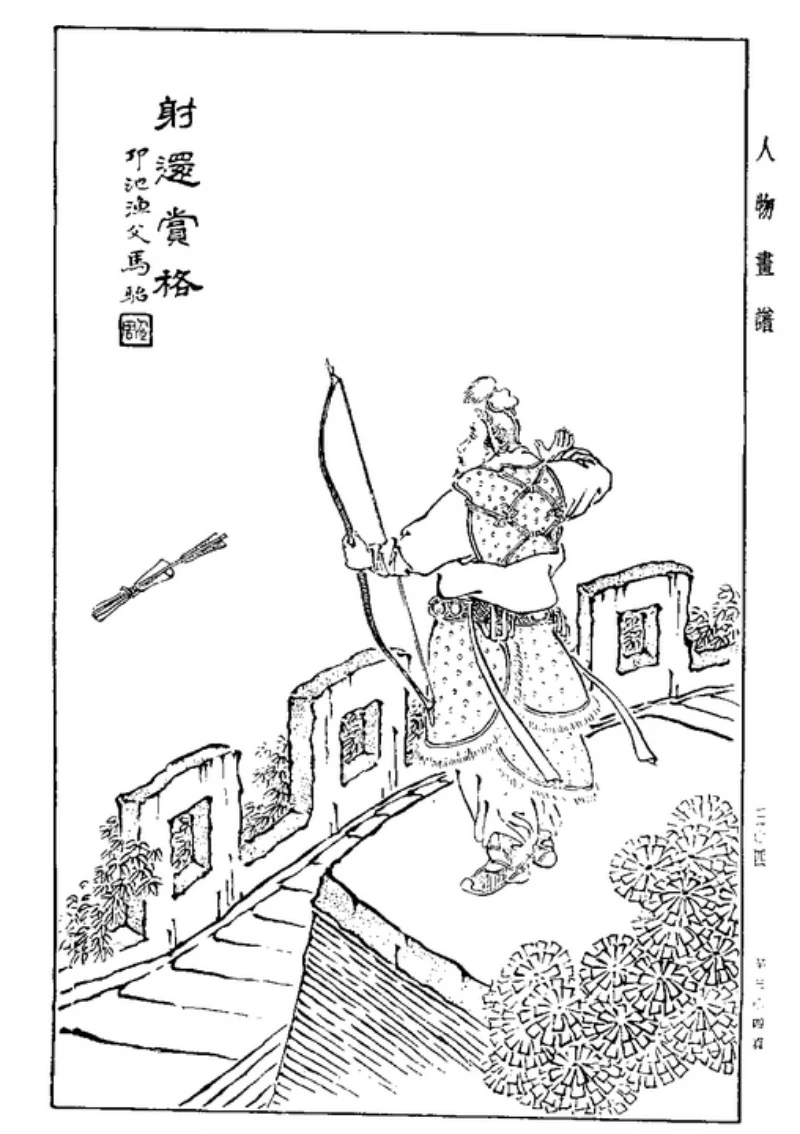
Gao Huan tried persuasion and rewards. Wei Xiaokuan replied that his fortifications were secure, supplies were sufficient, the attackers exhausted themselves while the defenders rested, and that he would never surrender. Gao then shot written reward notices into the city promising high office, a dukedom, a large fief, and enormous gifts to anyone who killed Wei. Wei wrote on the reverse that anyone who killed Gao Huan would receive the same reward and shot the notices back. Gao also brought Wei's younger brother Wei Ziqian to the walls under threat of a blade. Wei Xiaokuan showed no sign of yielding, which inspired the garrison to fight to the death.
After fifty days of fighting, Eastern Wei was said to have suffered seventy thousand casualties and was exhausted. Gao Huan's old illness returned, and a falling stone in the Eastern Wei camp was taken as an ominous sign. Gao lifted the siege on the first day of the eleventh lunar month and returned to Jinyang, where he died early the next year. The defense of Yubi made Wei Xiaokuan famous. Emperor Wen of Western Wei sent Zhangsun Shaoyuan and Wang Yue to commend him and promoted him to Cavalry General-in-Chief and Grand General Who Opens the Office, while advancing him to Duke of Jianzhong Commandery.
Late Western Wei and Early Northern Zhou
In 554 Wei Xiaokuan joined Yu Jin, Yuwen Hu, Yang Zhong, and others in a fifty-thousand-man campaign against Liang and captured Jiangling. For his merit he was made Duke of Rang County, Right Vice Director of the Department of State Affairs, and granted the surname Yuwen. In 556 Yuwen Tai, while touring the north, ordered him back to Yubi.
When Northern Zhou was founded in 557, Wei Xiaokuan became Junior Minister of Education. Under Emperor Ming he participated in scholarly work at the Linzhi Hall, checking books and records. In 560 Emperor Wu established Xunzhou at Yubi in recognition of Wei's defense and made him its inspector. When Northern Qi envoys came seeking border trade, Yuwen Hu suspected ulterior motives and sent Yin Gongzheng to consult Wei. Wei arranged a formal reception outside the city and used the discussions to address the emperor's aunt and Yuwen Hu's mother, improving relations. Captives from the east taken by Hu groups in Fenzhou were released, and Wei sent a letter expressing the court's wish for neighborly peace. Northern Qi then returned the imperial aunt and Yuwen Hu's mother with due ceremony.
Later in 560 Wei was promoted to Pillar of State. When Yuwen Hu planned an eastern attack on Northern Qi, Wei believed the time was not right and sent Xin Daoxian to remonstrate, but the advice was rejected. The campaign went badly. Wei subsequently proposed rapid fortification at Huagu and Changqiu to protect the Fen River region, warning that competition over Yiyang could draw Northern Qi toward the north. Yuwen Hu declined the proposal. In 570 Wei Xiaokuan was promoted to Duke of Yun with a total fief of ten thousand households.
Three Strategies for Defeating Northern Qi
In 575 Emperor Wu of Northern Zhou was determined to destroy Northern Qi. Wei Xiaokuan submitted three strategies: exploit divisions between ruler and ministers, use agents to deepen suspicion and disorder within the Northern Qi court, and accumulate strength until internal weakness offered an opportunity for a major offensive. He also advocated widespread counterintelligence along the frontier.
The most famous episode concerns the Northern Qi general Hulü Guang, courtesy name Mingyue. Wei Xiaokuan allegedly had verses circulated including the lines “a hundred sheng fly to heaven, the bright moon shines on Chang'an” and another saying that a high mountain would collapse without being pushed and a hu-tree would stand without support. These were intended to make Emperor Houzhu of Northern Qi suspicious of Hulü Guang, who was eventually executed. The episode was later presented as the removal of a major enemy commander without battle.
In 576 Emperor Wu campaigned against Northern Qi and passed Yubi, where he inspected the old defenses with admiration. Wei volunteered to serve as vanguard, but the emperor initially kept him at Yubi because of its strategic importance. Later, when Prince Zhao Yuwen Zhao campaigned against the Jihu, Wei was appointed an army commander to support him and captured four Northern Qi cities. After the fall of Jinzhou he again guarded Yubi, but because of age he was later recalled. In May 577 he became Grand Minister of Works, commander-general of Yanzhou, and Supreme Pillar of State.
Huainan Campaign and Final Years
In 579 Wei Xiaokuan was given military authority over eleven prefectures and fifteen garrisons including Xuzhou and Yanzhou, became commander-general of Xuzhou, and then field marshal in the Huainan campaign. Northern Zhou forces took Chen territory north of the Yangzi and extended their frontier to the river. For this achievement one of Wei's sons, Wei Shou, was separately created Duke of Hua with five thousand households.
In 580 Emperor Xuan of Northern Zhou died and Yang Jian became regent. Yuchi Jiong, commander-general of Xiangzhou, suspected that Yang intended to move against the Yuwen house and prepared rebellion. The court secretly learned of this and sent Wei Xiaokuan to replace him. Near Chaoge, Yuchi's officer Helan Gui arrived with a personal letter. Wei detained him in conversation, noticed signs of unease, suspected rebellion, and slowed his progress under the pretext of illness while sending ahead for medicine to gather intelligence. Yuchi then sent Wei Xiaokuan's nephew Wei Yi to meet him. Wei Yi initially concealed the plot, but when Wei Xiaokuan threatened to execute him, he revealed it. Wei then fled west with him, taking all relay horses from each post and telling station officials to prepare food and wine for Yuchi Jiong, who was supposedly approaching. Yuchi's pursuers were delayed at the stations by food and lack of fresh horses, allowing Wei to escape.
In the sixth lunar month Wei Xiaokuan was appointed field marshal for the eastern campaign against Yuchi Jiong. Many areas east of the passes responded to the rebellion. Wei's army defeated Yuchi's main force outside Ye; Yuchi committed suicide and the revolt collapsed. Wei returned to the capital in the tenth lunar month. On December 19, 580, the twenty-seventh day of the eleventh lunar month, he died at Shougui ward in Chang'an at the traditional age of seventy-two. The court posthumously granted him imperial credentials, Grand Preceptor, Supreme Pillar of State, command over eleven prefectures, and Governor of Yongzhou, and gave him the posthumous title Duke Xiang. He was buried at Shougui ward in Wannian County on December 30.