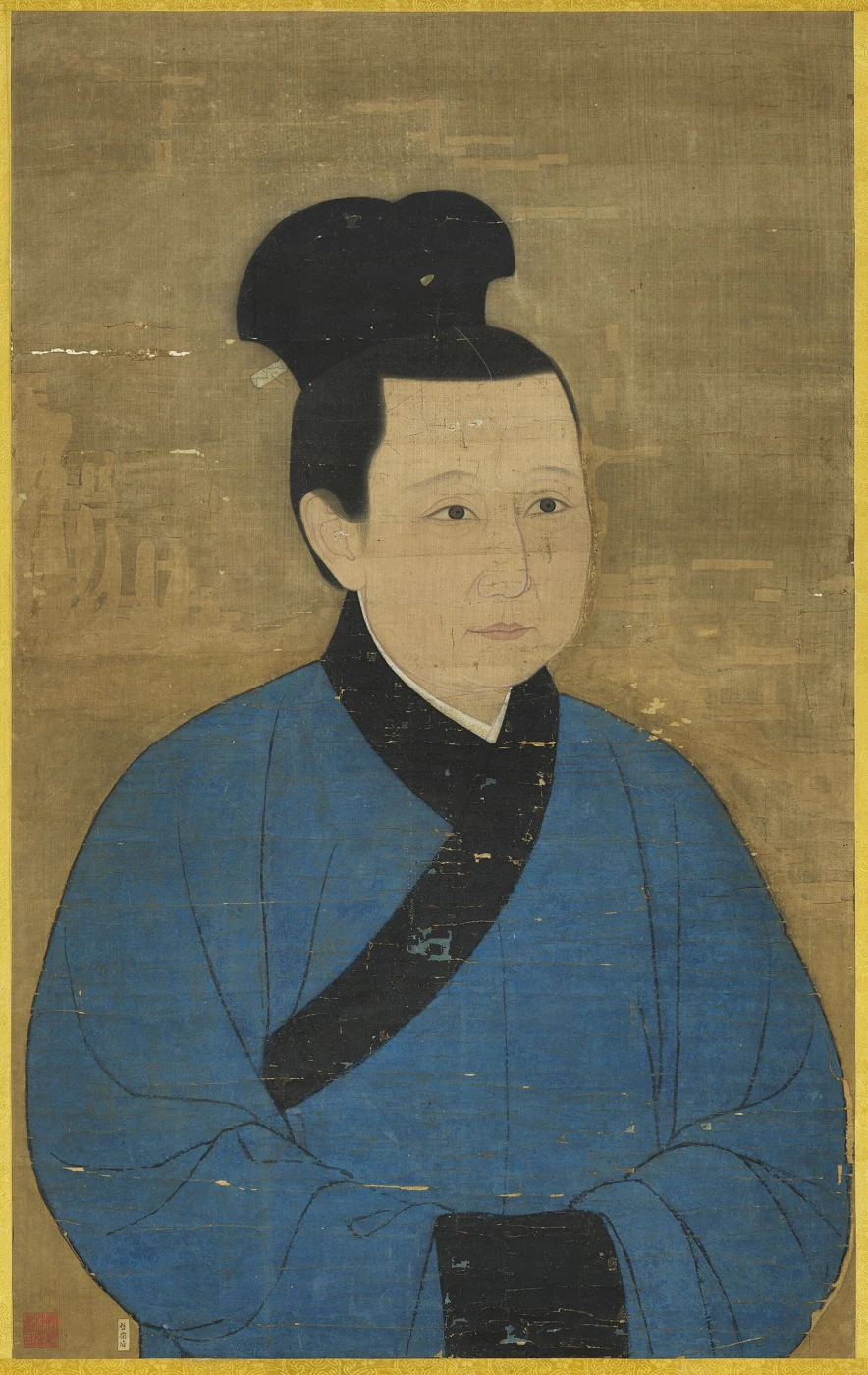
1073 CE–1131 CE
Empress Dowagerregent
Empress Meng
孟氏(宋哲宗皇后)
Empress Meng (1073–1131), whose personal name is not recorded, was a native of Mingzhou (present-day Yongnian District, Handan, Hebei) and the first empress of Zhao Xu, Emperor Zhezong of Song. She was historically known as Empress Yuanyou and, in the early Southern Song, as Empress Dowager Yuanyou and later Empress Dowager Longyou. Her final posthumous title was Empress Zhaoci Shengxian. During her life she was twice deposed…
1073 CE–1131 CENorthern Song
PROFILE
Empress Meng (1073–1131), whose personal name is not recorded, was a native of Mingzhou (present-day Yongnian District, Handan, Hebei) and the first empress of Zhao Xu, Emperor Zhezong of Song. She was historically known as Empress Yuanyou and, in the early Southern Song, as Empress Dowager Yuanyou and later Empress Dowager Longyou. Her final posthumous title was Empress Zhaoci Shengxian. During her life she was twice deposed and twice restored, and at two moments of acute political crisis—the fall of the Northern Song and the establishment of the Southern Song—she ruled from behind the curtain. She was therefore a key figure in the transition between the Northern and Southern Song. Born into a military family, she was a granddaughter of Meng Yuan, who had served as defense commissioner of Meizhou and commander of the palace cavalry and was posthumously awarded the rank of Defender-in-chief. In 1092, the seventh year of the Yuanyou era, Grand Empress Dowager Gao arranged for her to be installed as empress. In 1096, the third year of the Shaosheng era, she was deposed in connection with a sorcery accusation and sent to Yaohua Palace. She was restored after Emperor Huizong's accession in 1100 but was deposed again in 1102. During the Jingkang Incident in 1127, her status as a deposed empress meant that she escaped deportation by the Jin. Zhang Bangchang invited her to rule from behind the curtain, after which she supported Prince Kang Zhao Gou's accession and thereby helped establish the Southern Song. During the Miao-Liu Mutiny in 1129 she was again compelled to act as regent, secretly summoned Han Shizhong and others to restore the emperor, and relinquished power immediately after the revolt was suppressed. She died at the imperial residence in Yuezhou in 1131. At a time when much of the Song imperial family had been lost, her exceptional position helped preserve the dynastic legitimacy of the Zhao house, and Emperor Gaozong treated her with the respect due a mother.
- Alternative names
- Zhaoci Shengxian; Empress of Emperor Zhezong; Empress Meng
- Era
- Song · Northern Song
- Dynasty/Regime
- Song · Northern Song
- Identity
- Empress Dowager; regent
- Date of Birth
- 1073
- Date of Death
- 1131
- Ethnicity/Ethnic affiliation
- Not reliably confirmed in available sources
- Native place
- Mingzhou (present-day Yongnian District, Handan, Hebei)
- Place of birth
- Not reliably recorded
- Period of regency
- Not reliably confirmed in surviving sources
- Posthumous title
- Empress Zhaoci Shengxian
- Dynasty
- Song dynasty (Northern Song)
- Ethnicity
- Not reliably confirmed in available sources
- Ancestral Home
- Mingzhou (present-day Yongnian District, Handan, Hebei)
- Place of Birth
- Unknown
- Place of Death
- Unknown
- Lifespan
- 58 years old
- Highest Office
- See the Biography section
- Peerage
- Duke of Wen
- Posthumous Honors
- Acting Grand Tutor
LIFE TIMELINE
Born | into an official family in MingzhouOpen
Born | into an official family in Mingzhou
Age 17 | Selected for the palace and favored by Grand Empress Dowager Open
Age 17 | Selected for the palace and favored by Grand Empress Dowager Gao and Empress Dowager Xiang
Age 19 | Personally invested as empress by Emperor Zhezong at Wende HaOpen
Age 19 | Personally invested as empress by Emperor Zhezong at Wende Hall
Age 23 | Deposed in the sorcery case, sent to Yaohua Palace, and givenOpen
Age 23 | Deposed in the sorcery case, sent to Yaohua Palace, and given the religious name Chongzhen
Age 27 | Emperor Zhezong died; Emperor Huizong acceded; under Empress Open
Age 27 | Emperor Zhezong died; Emperor Huizong acceded; under Empress Dowager Xiang's administration, Lady Meng was restored as Empress Yuanyou
Age 29 | Implicated in the political struggle over the Yuanyou factionOpen
Age 29 | Implicated in the political struggle over the Yuanyou faction and deposed a second time; returned to Yaohua Palace
Age 53 | Yaohua Palace and Yanning Palace burned in succession; moved Open
Age 53 | Yaohua Palace and Yanning Palace burned in succession; moved to a private residence in front of Xiangguo Temple
Age 54 | During the Jingkang Incident, escaped deportation because of Open
Age 54 | During the Jingkang Incident, escaped deportation because of her deposed status; Zhang Bangchang invited her to rule from behind the curtain; she supported Zhao Gou's accession, then withdrew from regency and was honored first as Empress Dowager Yuanyou and later as Empress Dowager Longyou
Age 56 | During the Miao-Liu Mutiny, was compelled to rule from behindOpen
Age 56 | During the Miao-Liu Mutiny, was compelled to rule from behind the curtain again, secretly summoned Han Shizhong to restore the emperor, and withdrew after the mutiny was suppressed
Age 58 | Died at the imperial residence in Yuezhou and received the poOpen
Age 58 | Died at the imperial residence in Yuezhou and received the posthumous title Empress Zhaoci Xianlie
Posthumous | Posthumous title changed to Empress Zhaoci ShengxianOpen
Posthumous | Posthumous title changed to Empress Zhaoci Shengxian
BIOGRAPHY
Major Activities
Two Regencies Empress Meng twice ruled from behind the curtain, both during existential crises for the Song. The first occurred in 1127, after the fall of the Northern Song and Zhang Bangchang's assumption of imperial status. Invited back into the palace as regent, she supported Prince Kang Zhao Gou's accession and thereby helped transmit dynastic legitimacy to the Southern Song. The second occurred during the Miao-Liu Mutiny of 1129. Forced to act as regent, she secretly worked to summon Han Shizhong and other loyalist commanders, then immediately relinquished power once the revolt was suppressed. In both cases her regency ended in political stabilization and the return of power to the emperor, an unusual pattern among Song imperial consorts. ### Survival in the Jingkang Incident and the Founding of the Southern Song When the Jin captured Bianjing in 1127, all formally ranked palace women were deported north. Lady Meng alone survived in the capital because her status as a deposed empress had removed her from the palace registers. As the only surviving senior member of the Zhao imperial household in Bianjing, she was invited by Zhang Bangchang to rule from behind the curtain. She decisively supported Prince Kang Zhao Gou, sent envoys to receive him, and issued a handwritten proclamation to the realm. Her actions provided a legal basis for the establishment of the Southern Song. Gaozong later recalled that although he had not known her before, after welcoming him at Nanjing she loved him no less than her own child. ### Mediation during the Miao-Liu Mutiny During the 1129 mutiny led by Miao Fu and Liu Zhengyan, Empress Meng was compelled to assume the regency after Gaozong's forced abdication. Outwardly she reassured the mutineers while secretly cooperating with Zhu Shengfei to free Liang Hongyu and summon Han Shizhong. Once Han and other loyalist forces reached Hangzhou and the rebels became frightened, Zhu and his allies induced the mutineers to accept Gaozong's restoration. The empress dowager then urged the emperor to return and immediately withdrew from power. Her conduct throughout the crisis was cautious and decisive: she avoided escalating the confrontation while preserving Gaozong's throne. ### The Sorcery Case and Two Depositions In 1096, Empress Meng was implicated in an accusation arising from the use of talisman water and was framed by Lady Liu. Torture and forced testimony produced a wrongful case that led to her deposition and confinement at Yaohua Palace. She was restored after Emperor Huizong's accession in 1100 but deposed again in 1102 because of factional politics. These events reflected the fierce New Policies–old faction struggle of the late Northern Song. Empress Meng, originally selected by Empress Gao, became a victim of the political conflict. Paradoxically, her deposed status later allowed her to survive the Jingkang Incident and play a central role in the early Southern Song.
Personal Relations
- Grandfather: Meng Sui, posthumously acting Grand Preceptor and military governor of Anhua Army
- Father: Meng Zai, acting military governor and observation commissioner of Anwu Army; posthumously Grand Master of the Palace with Equal Rank to the Three Excellencies
- Mother: Lady Wang, repeatedly honored and finally titled Grand Lady of Rong
- Nephew: Meng Zhonghou, Tongzhilang and official of the Directorate for Imperial Manufactures; after the Jingkang Incident he helped welcome and attend the empress dowager ### Rulers and Imperial Relations - Zhao Xu, Emperor Zhezong of Song: husband; installed her as empress in 1092 and deposed her in 1096
- Zhao Ji, Emperor Huizong of Song: brother-in-law; restored her in 1100 and deposed her again in 1102
- Zhao Gou, Emperor Gaozong of Song: nephew; received her support after the Jingkang Incident, honored her as empress dowager, and treated her as a mother
- Grand Empress Dowager Gao, Empress Xuanren Shenglie: selected Lady Meng and personally taught her court etiquette
- Empress Dowager Xiang, Empress Qinsheng Xiansu: participated in selecting her and restored her position under Emperor Huizong ### Conflicts - Lady Liu, later Empress Zhaohuai: rival for imperial favor and principal instigator of the sorcery accusation
- Zhang Dun: chief councillor who supported Lady Liu and helped construct the case against Empress Meng
- Hao Sui: eunuch who encouraged Lady Liu's bid for the empress's position and participated in fabricating charges
- Cai Jing: chief councillor who advocated her second deposition during the Chongning era ### Associates - Zhang Bangchang: invited her to rule from behind the curtain after the Jingkang Incident and restored her title as Empress Yuanyou
- Lü Haowen: advised Zhang Bangchang to receive Lady Meng into the palace
- Zhu Shengfei: assisted her political maneuvering during the Miao-Liu Mutiny
- Han Shizhong and Liang Hongyu: responded to her secret appeal for loyalist intervention during the mutiny
- Dong Dunyi: reviewed the sorcery case and protested on Empress Meng's behalf
Historical Assessment
Song and Contemporary Assessments - Her biography in the *History of Song* describes Empress Meng as “respectful in nature,” states that she had “not the slightest fault” in the palace, and records widespread sympathy over her two depositions.
- Censor Dong Dunyi memorialized after reviewing the sorcery case that both Heaven and the people opposed her deposition.
- Emperor Gaozong expressed deep respect for her, saying that after she welcomed him at Nanjing she loved him no less than her own child, and later urgently ordered her return while she was displaced in Jiangxi.
- During the Miao-Liu Mutiny she told the rebels that with a powerful enemy outside, a woman holding a three-year-old child could not command the realm, demonstrating clear political judgment. ### Song–Yuan Period - The Southern Song historian Li Tao recorded the sorcery case in detail in the *Long Draft of the Continuation of the Comprehensive Mirror in Aid of Governance* and was sympathetic to Empress Meng, attributing the case to framing by Zhang Dun, Hao Sui, and others.
- Yuan compilers of the *History of Song* emphasized that she alone survived “because she had been deposed” and affirmed her role in the establishment of the Southern Song.
- Historians around the Song–Yuan transition compared her with worthy empresses such as Empress Yin of Emperor Guangwu of Eastern Han, regarding her as a woman who, despite deposition, preserved Song dynastic legitimacy as empress dowager and could be called a “mother of restoration.” ### Ming and Qing Periods - Wang Fuzhi, discussing Empress Meng in *Song Lun*, regarded her timely relinquishing of power after both regencies as unusually virtuous among Song imperial women, though he also criticized her inability to prevent Emperor Gaozong's compromise with the Jin.
- Bi Yuan recorded her affairs in detail in the *Continuation of the Comprehensive Mirror in Aid of Governance* and treated the sorcery case as an injustice.
- Zhao Yi, in *Nian’er Shi Zhaji* (*Notes on the Twenty-Two Histories*), discussed female intervention in Song politics and emphasized that Empress Meng's two regencies arose from emergencies and that she relinquished power promptly, contrasting her with rulers such as Empress Lü and Wu Zetian. ### Modern Assessments - Modern scholars generally regard Empress Meng as a key figure in the transition between the Northern and Southern Song, whose survival as a deposed empress supplied an important source of dynastic legitimacy after the Jingkang Incident.
- A study by Wang Zhongcan of Xuchang University argues that ritual or sorcery practices may indeed have been carried out by eunuchs and palace attendants around Empress Meng, but that the investigation was manipulated by reformist and opportunist factions and ultimately extended culpability to the empress herself.
- Contemporary scholarship generally assesses her conduct during the Miao-Liu Mutiny favorably, noting her composure and effective handling of the crisis in both stabilizing the rebels and preserving Emperor Gaozong's throne.
CONTEMPORARIES
Bibliography
- History of Song*, vol. 243, “Biographies of Empresses, Part Two: Empress Zhaoci Shengxian Meng of Emperor Zhezong”