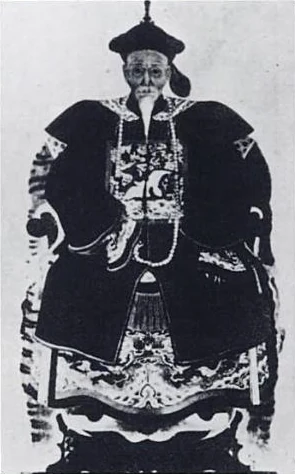
Biography
Classical Tutelage and Judicial Acumen in the Northwest Deng Tingzhen's ancestral roots traced to Dongting West Mountain in Suzhou, though his grandfather established the family in Jiangning. His father Deng Wenbing was an imperial tribute student under Qianlong. Demonstrating scholarly brilliance from youth, Deng entered the Jiangning prefectural academy at sixteen and gained admission to the elite Zhongshan Academy in Nanjing, where he studied under Yao Nai, the foremost master of the Tongcheng literary school. Under Yao Nai's mentorship, Deng honed classical philology, mastered prose, and developed exceptional expertise in jade-seal script calligraphy. In 1801, at the age of twenty-six, he obtained the Jinshi degree, was selected into the Hanlin Academy, and was appointed a compiler. In 1813, following filial mourning, Deng was dispatched to Shaanxi as Prefect of Yan'an, later governing Yulin and Xi'an. In the Guanzhong region, Deng earned nationwide admiration for judicial rigor and rectifying wrongful adjudications. He personally reviewed thousands of cold cases, successfully clearing innocent defendants in major homicide convictions in Hancheng and Nanzheng. His scrupulous protection of destitute widows and orphans earned him the affectionate moniker "Deng the Clear Sky." In 1820, Emperor Jiaqing promoted him to Judicial Commissioner of Hubei. ### Decade of Benevolent Governance in Anhui In 1826, Emperor Daoguang promoted Deng to Governor of Anhui, charging him with administrative, salt, and water conservancy governance. Confronted with widespread banditry across the Jianghuai basin, Deng strengthened the Baojia local defense system and prohibited unauthorized fabrication of fowling pieces, strictly punishing violent criminal cabals while petitioning the throne to abolish archaic conventions exiling implicated female relatives to extreme frontiers. Addressing perennial flooding along the Huai and Yangtze Rivers, Deng toured disaster zones by boat, orchestrating the massive restoration of ancient hydraulic projects including Anfeng Pond and Quebei sluices, dredging the Mo River, and strengthening hundreds of miles of dikes to safeguard agricultural irrigation. His ten-year tenure in Anhui was marked by social tranquility and economic revival, earning him widespread recognition as the preeminent provincial governor of the Daoguang era. ### Viceroyalty of Liangguang and the Humen Crusade In 1835, at age sixty, Deng was promoted to Viceroy of Liangguang, governing Guangdong and Guangxi. British illicit opium smuggling was then draining imperial silver reserves and enervating coastal garrisons. Although Deng initially echoed proposals for relaxing prohibitions in 1836, direct inspections of the Pearl River estuary exposed the gruesome devastation wrought upon Chinese society, prompting him to become an unyielding prohibitionist. Beginning in 1837, Deng ordered Admiral Guan Tianpei to intensify maritime patrols, raiding hundreds of domestic opium dens while issuing stringent ultimatums to British Chief Superintendent of Trade Charles Elliot demanding the expulsion of major smugglers like Jardine and Dent. Facing British defiance, Deng blockaded maritime approaches, mapped shoals alongside Guan Tianpei, established Shajiao battery, and strung defensive iron chains and timber booms across Humen. In spring 1839, Imperial Commissioner Lin Zexu arrived in Guangzhou. Rejecting bureaucratic jealousy, Deng pledged complete solidarity: "May the vast ocean witness my unbreakable shared resolve!" The two viceroys worked in absolute harmony, blockading the Thirteen Factories, confiscating over 20,000 chests of opium from foreign traders, and orchestrating the monumental public destruction of more than two million pounds of opium at Humen beach. ### Defense of Xiamen during the Opium War Anticipating British naval retaliation against Fujian, the Qing court reassigned Deng as Viceroy of Min-Zhe in early 1840. Drawing upon his southern defense experience, Deng inspected coastal approaches alongside Fujian Admiral Chen Huacheng. At the southern cape of Hulishan on Xiamen Island, he constructed an immense stone-masonry battery stretching 500 zhang, fortifying it with barracks and mounting more than one hundred heavy iron artillery pieces, creating the formidable "Long Wall Battery." In July 1840, British Commodore George Elliot led expeditionary vessels northward, and warships such as HMS *Blonde* assaulted Xiamen harbor attempting to deliver threatening demands and force a landing. Deng personally mounted the front ramparts with drawn sword, ordering coastal batteries to unleash coordinated salvos. Qing artillery scored direct hits on British masts and hulls, killing multiple foreign marines and repelling the assault in the first decisive coastal victory for Qing forces in the Opium War. ### Exile, Rehabilitation, and Last Days Despite local victories, the fall of Dinghai and British naval incursions near Tianjin panicked Emperor Daoguang. Appeasement advocates led by Qi Shan seized the opportunity to scapegoat Deng and Lin for "provoking hostilities." In October 1840, both officials were cashiered. In 1841, Deng was sentenced to penal servitude in remote Yili, Xinjiang. During his three-year exile, the septuagenarian statesman remained magnanimous and undeterred. Residing adjacent to Lin Zexu, the two companions shared poetry and collaborated with local authorities in digging irrigation canals and reclaiming wasteland. Lin commemorated their shared bond with the verse: "Together we share life and sorrow till our hair turns white; who on the green pages of history shall judge right from wrong!" In autumn 1843, Deng was pardoned and reinstated as Gansu Provincial Treasurer. He braved desert dust storms surveying vast frontier tracts between Yinchuan, Longxi, and Jiuquan, mapping out nearly twenty thousand hectares of arable land and resettling displaced farmers. Promoted to Governor of Shaanxi in 1845 and Acting Viceroy of Shaan-Gan, he succumbed to chronic exhaustion in Xi'an on 1846 (20th day of the third lunar month, Daoguang 26), at age seventy-one. His remains were interred at Lingshan, Jiangning, and the court granted him the posthumous title Keqian.
Deng Tingzhen was born on 26 January 1776 in the Wanzhu garden west of the Zhonghua gate at Nanjing, into a family of officials, and was educated from childhood in the Confucian classics, historical lore and poetry. He became a licentiate at sixteen, studied at the Jiangning county school and the Zhongshan academy, and took instruction from a noted teacher. In 1800 he sat the provincial examination of Jiangnan and came fourth among the successful candidates; the next year he passed the metropolitan examination at Beijing, was graded in the second class in the palace examination and made a bachelor of the Hanlin, and received appointment as a compiler. He several times examined papers for the provincial and metropolitan examinations, and was praised for the quality of those he passed.
In 1810 he was appointed prefect of Taiwan, but the governor of Zhejiang asked that he be kept in that province as prefect of Ningbo. He soon went home on his mother's death, and on the expiry of mourning was made prefect of Yan'an in Shaanxi, serving afterward in Yulin and Xi'an. He was renowned for his handling of criminal cases, redressed unjust verdicts at Hancheng and Nanzheng, and protected a widow and her son at Tongzhou, so that his fame reached the capital. In 1820 he was promoted to be judicial commissioner of Hubei and acted as provincial treasurer; the farmland along the Yangtze had long been under water while the taxes on it were still collected, and he memorialized that the taxes on these fields be remitted altogether. In 1821 he was made provincial treasurer of Jiangxi. As prefect of Xi'an he had failed to notice that the magistrate of Weinan, Xu Run, was shielding a rich man of the county, Liu Quanbi, from a charge of murder, and was dismissed for complicity; the board proposed to send him to a garrison in Xinjiang, but the Daoguang emperor, knowing him to have acted without self-interest, excused him from the frontier, gave him the rank of the seventh degree and sent him for employment in Zhili. In 1824 he was promoted to judicial commissioner of Shaanxi and afterward to provincial treasurer; in 1826 he became governor of Anhui, where for ten years he governed with a preference for quiet, and the province was well ordered.
In 1836, when the chief minister of the court of state ceremonial, Xu Naiji, memorialized in favour of legalising the opium trade, the emperor sent the memorial to Deng Tingzhen and the governor of Guangdong for their opinion. He agreed with it at first and joined in a joint memorial setting out nine detailed regulations for the trade. As the harm wrought by opium became plainer and Xu Naiji's proposal was refuted, he reviewed his position, turned from relaxation to strict prohibition, and carried the policy out in earnest, notifying the British superintendent of trade that all opium hulks lying in the inner and outer waters must return home, neither lingering nor entering the port of Guangzhou. In 1837 the British superintendent Elliot and others worked to break the prohibition, and with Elliot's support armed smugglers again ran into Whampoa to sell opium. Deng Tingzhen denounced the provocation sharply and named Elliot as bound to surrender and expel nine opium dealers including Jardine, Dent and Matheson; refusing to give an inch, he forced Elliot to withdraw from Guangzhou. In the same year the British squadron commander Maitland arrived at Macao with warships, claiming to inspect trade in his capacity as superintendent; Deng Tingzhen ordered the passes by water and land strictly guarded, declared that Maitland's entry into Guangzhou would be contrary to Chinese law, and drove him off. He organised the three divisions of the Guangdong fleet, joined Guan Tianpei in climbing the hills about the Bogue to plan its defences, closed several hundred inland opium dens, seized the smuggling craft, and so cut the hulks off from their market. When in 1838 the chief minister of foreign reception, Huang Juezi, memorialized for strict prohibition, Deng Tingzhen pledged himself with Lin Zexu to the work, helping to search out the smuggling, confiscate the opium, lay booms and chains and reform the fleet, and became Lin Zexu's close colleague.
In the twelfth month of the nineteenth year of Daoguang (January 1840) Deng Tingzhen was transferred to be governor-general of Fujian and Zhejiang, where he bought foreign guns, built batteries, raised drilled volunteers and sent the fleet to sea on patrol. In the seventh month the British attacked Xiamen, and he commanded the fleet in person and drove them off. Soon after, through the machinations of the appeasers, he was dismissed together with Lin Zexu and sentenced to exile at Ili; in the debate at court he was also the first minister openly to oppose the cession of Hong Kong. In the intercalary seventh month of 1843 he was released and went home, and was soon given the third rank and made provincial treasurer of Gansu. He proposed a survey of waste land and carried it out himself, from east of Yinchuan to Taozhou and the end of Long county and west to Jiuquan, finding more than nineteen thousand four hundred qing of arable land, besides fifteen hundred-odd qing of Muslim tribute land and a hundred-odd qing of the Ningxia horse pastures; these were taken into public holding, the land long in cultivation taxed and the waste opened to settlers, and the emperor issued a decree praising his labour and restored him to the second rank. In 1845 he was made governor of Shaanxi and acted as governor-general of Shaanxi and Gansu; on the twentieth day of the third month of 1846 he died in that post at seventy-one, and in the tenth month was buried at the foot of Lingshan east of Jiangning.
Deng Tingzhen was a master of the examination essay and especially of phonology; his notes and his poems were both published, among them the Register of Initial and Final Doubled Sounds, the same for the Shuowen, the Poems of the Shiguan Studio and the Remarks on Lyric from the Shuangyan Studio. He was also a calligrapher, skilled in regular and running script and above all in small seal.