Biography
Family Background and Early Life
Zhou Yafu was the second son of Zhou Bo, Marquis of Jiang, a founding meritorious official of the Western Han. Zhou Bo had followed Liu Bang in his uprising, won the title Marquis of Jiang through military service, and rose to Defender-in-chief and Right Chancellor. He played a decisive role in eliminating the Lü clan and enthroning Emperor Wen. Little is known of Zhou Yafu's early life, though he once served as Administrator of Henei. According to the *Records of the Grand Historian*, the physiognomist Xu Fu once told Zhou Yafu that he would be made a marquis in three years, become Grand Councilor eight years later, and die of starvation nine years after that. Zhou Yafu did not believe her, because his elder brother Zhou Shengzhi had already inherited their father's marquisate. Xu Fu pointed to a vertical line at the corner of his mouth and said that it was the physiognomic sign of death by starvation.
In 162 BCE, Zhou Shengzhi lost his title after committing murder. Emperor Wen, mindful of Zhou Bo's achievements, ordered that the most capable of Zhou Bo's sons be selected to inherit the marquisate. Zhou Yafu was universally recommended and was therefore made Marquis of Tiao, continuing the family line. The first part of Xu Fu's prediction was thus fulfilled.
The Xiliu Camp and Emperor Wen's Final Charge
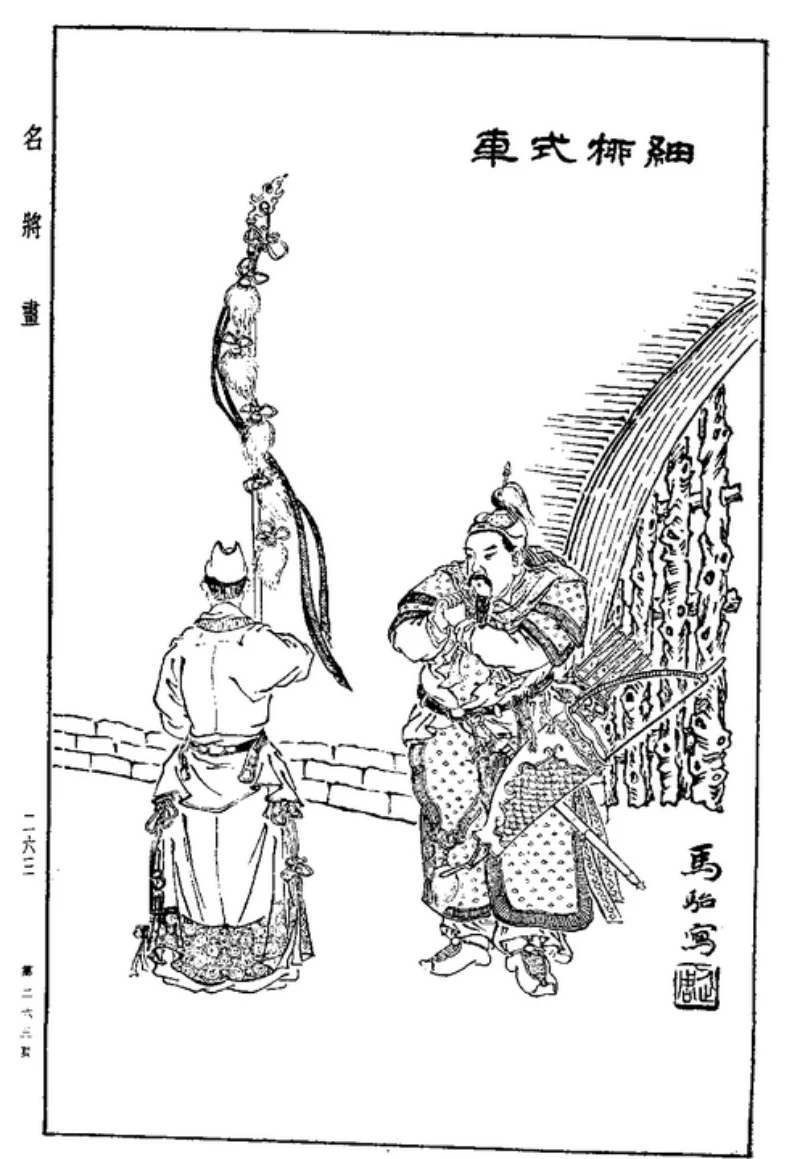
In 158 BCE, the Xiongnu launched a major incursion. To defend the capital Chang'an, Emperor Wen ordered Liu Li, Minister of the Imperial Clan, to camp at Bashang; Xu Li, Marquis of Zhuci, at Jimen; and Zhou Yafu, then Administrator of Henei, at Xiliu. Emperor Wen personally inspected the three camps. At Bashang and Jimen, the imperial party rode straight in and was received by the troops. At Xiliu, however, soldiers stood fully armored with weapons ready and crossbows drawn; even the emperor's advance party was denied entry. The officer at the gate said, “The general has orders: in the army we obey the general's orders, not the emperor's edicts.” Only after Emperor Wen sent an envoy carrying the imperial tally did Zhou Yafu order the gate opened. The guards then announced that galloping was forbidden within the camp, so the emperor loosened his reins and proceeded slowly. Before the central command tent, Zhou Yafu, fully armored, saluted with his weapon and said, “An armored soldier does not perform the court bow; permit me to greet Your Majesty with military courtesy.” Emperor Wen was deeply moved and bowed from his carriage in return.
After leaving, Emperor Wen exclaimed that Zhou Yafu was a “true general,” whereas the camps at Bashang and Jimen were like children's games and their commanders could easily be surprised and captured. A month later the Xiongnu withdrew. Emperor Wen promoted Zhou Yafu to Commandant of the Capital, placing the capital's military forces under him. Before his death, Emperor Wen told Crown Prince Liu Qi that in an emergency Zhou Yafu could truly be entrusted with command. After Liu Qi became Emperor Jing, he appointed Zhou Yafu General of Chariots and Cavalry.
Suppression of the Seven States' Rebellion
In 154 BCE, King Liu Bi of Wu joined King Liu Wu of Chu, King Liu Ang of Jiaoxi, and rulers of four other kingdoms in revolt under the slogan of “executing Chao Cuo and clearing the emperor's side.” Emperor Jing promoted Zhou Yafu to Defender-in-chief and sent him east. Zhou Yafu proposed that the swift and fierce Chu forces should not be met head-on: Liang should be used to hold the rebels while he cut their supply lines. Emperor Jing approved the plan.
At Bashang, Zhou Yafu met the commoner Zhao She, who advised him to detour through Lantian and Wuguan and proceed directly to Luoyang, avoiding the dangerous route between Mount Xiao and Mianchi where rebels might have set an ambush. Zhou Yafu followed the advice and, after reaching Luoyang, searched the Xiao–Mianchi area and indeed captured Wu troops lying in ambush. Meanwhile, the Wu army was fiercely attacking Liang. King Liu Wu of Liang repeatedly requested aid, but Zhou Yafu held his position at Changyi, even disregarding Emperor Jing's order to rescue Liang. Instead he secretly sent Han Tuidang, Marquis of Gonggao, and others with light cavalry to cut the Wu-Chu supply routes. Short of provisions, the rebels repeatedly challenged him, but he refused battle. When disorder once broke out at night and soldiers began fighting one another, Zhou Yafu remained calmly in bed until order returned. Later, when the Wu army feigned an attack on the southeast of his camp, he judged that the true assault would come from the northwest and reinforced that sector; events proved him correct. Unable to break the Han defenses and out of supplies, the Wu army withdrew. Zhou Yafu pursued with elite troops and routed it. Liu Bi fled south to Dantu and was killed by Eastern Yue people a little over a month later. The rebellion was suppressed in three months, vindicating Zhou Yafu's strategy, though King Liu Wu of Liang resented him for refusing immediate relief.
Chancellorship and Loss of Favor
In 152 BCE, after Grand Councilor Tao Qing retired because of illness, Emperor Jing appointed Zhou Yafu Grand Councilor. At first the emperor relied heavily on him. In 149 BCE, however, Emperor Jing wished to depose Crown Prince Liu Rong, son of Consort Li. Zhou Yafu firmly opposed the decision, and the emperor began to distance himself from him. Whenever King Liu Wu of Liang came to court, he also spoke against Zhou Yafu before Empress Dowager Dou.
Two later disputes deepened the estrangement. Empress Dowager Dou wanted her brother Wang Xin to be made a marquis. Emperor Jing said that the matter should be discussed with the Grand Councilor. Zhou Yafu invoked Emperor Gaozu Liu Bang's covenant: “No one not of the Liu clan shall be made king; no one without merit shall be made marquis. If the covenant is violated, all under Heaven shall attack him.” He therefore argued that Wang Xin, having no merit, could not properly be enfeoffed, and the emperor dropped the proposal. Later, five Xiongnu leaders including Weixulu surrendered to Han. Emperor Jing wished to make them marquises to encourage future defections, but Zhou Yafu objected that if men who betrayed their own ruler were rewarded, the court could no longer condemn ministers for disloyalty. Emperor Jing was displeased and enfeoffed the five anyway. Zhou Yafu then pleaded illness and apologized, and in 147 BCE he was removed from office.
After his dismissal, Emperor Jing once summoned Zhou Yafu to a palace banquet and deliberately placed before him a large piece of meat without cutting it or providing chopsticks. Zhou Yafu, displeased, asked an attendant for chopsticks. The emperor laughed and asked, “Is this not enough for you?” Zhou Yafu removed his cap and apologized. When the emperor told him to rise, Zhou Yafu immediately strode out. Watching his back, Emperor Jing remarked that such a resentful man could not serve a young ruler.
Death in Prison
When Zhou Yafu was old, his son bought five hundred sets of armor and shields from government craftsmen for his father's funeral. Such arms were forbidden goods. His son also failed to pay the hired laborers, who in anger reported that he had illegally purchased state weapons and intended rebellion. Zhou Yafu was implicated. He did not know what his son had done and refused to answer investigators. Emperor Jing angrily ordered the case transferred to the Chamberlain for Law Enforcement. Asked why he planned rebellion, Zhou Yafu replied that the purchased objects were burial goods. An officer retorted that even if he did not rebel above ground, he intended to rebel below it. Subjected to increasing humiliation, Zhou Yafu tried to kill himself when first arrested but was stopped by his wife. In prison he refused food for five days, vomited blood, and died, fulfilling Xu Fu's prediction that he would die of starvation. His marquisate was abolished.
The Physiognomist's Reading and the Camp at Xiliu
Zhou Yafu was a son of Zhou Bo, the marquis of Jiang. When he was governor of Henei he asked the old woman Xu Fu, famous for reading faces, to read his, and she told him: "In three years you shall be a marquis; eight years a marquis and you shall be general and chancellor, holding the state's authority, honoured and with no equal among subjects; and nine years after that you shall die of hunger." Zhou Yafu did not believe it at all and laughed: "My elder brother has already taken my father's marquisate, and if he dies his son will succeed him — how should I be made marquis? And if I am as honoured as you say, how should I die of hunger?" Xu Fu said her reading was only from the face, and pointing at the corner of his mouth said: "There is a line running into your mouth — that is the look of death by hunger." Zhou Yafu was astonished. By chance, three years later his brother Zhou Shengzhi lost his marquisate for killing a man, and Emperor Wen, recalling Zhou Bo's services in founding the Han and unwilling to deprive the Zhou family of its title, ordered the worthiest of Zhou Bo's sons to be chosen; all agreed on Zhou Yafu, and he was made marquis of Tiao in succession to the marquis of Jiang.
In the sixth year after Emperor Wen's change of era (158 BC), the Xiongnu made a great incursion, and the emperor posted three armies near Chang'an: Liu Li, the clan's director, at Bashang; Xu Li, marquis of Zhuzi, at Jimen; and Zhou Yafu, governor of Henei, at Xiliu. The emperor went in person to cheer them. At Bashang and Jimen his carriage "drove straight in, and the generals and their subordinates saw him off on horseback," and the commanders there knew nothing until he arrived, greeting him in confusion. At Xiliu it was wholly otherwise: "the officers and men wore armour, their blades were sharp, their crossbows drawn and at the full," and the imperial outriders were stopped at the gate; when they said "the son of heaven is coming," the gate officer answered: "The general's order is that in the army one hears the general's command, not the son of heaven's edict." When the emperor arrived and sent an envoy with his tally, Zhou Yafu gave the order to open the gate; and the guard solemnly told the attendants: "The general's rule is that no carriage may gallop in camp," so that the emperor "checked the reins and went slowly." Before the great tent Zhou Yafu, in full armour, came out with weapons in hand and saluted with joined hands, saying: "A man in armour does not bow; I beg leave to be received with the rites of war." The emperor was moved, "changed countenance and leaned on the crossbar of his carriage," and sent word of thanks: "The emperor respectfully cheers the general." Leaving the gate, the ministers were all astonished, but the emperor said with feeling: "Ah, this is a true general! The armies at Bashang and Jimen were like children at play; their generals could be surprised and taken. But as for Yafu, could he be attacked?" and he praised him long. After a month the three armies were disbanded and Zhou Yafu was made commandant of the capital. Later, when Emperor Wen lay dying, he charged the crown prince: "Should there be an emergency, Zhou Yafu can truly be given troops." After Wen's death, Emperor Jing made Zhou Yafu general of chariot and horse.
Suppressing the Revolt of the Seven States
In the third year of Jing (154 BC), Wu and Chu rebelled, and Zhou Yafu, from commandant becoming grand commandant, went east against them. He set out his plan to the emperor: "The Chu troops are swift and light, and hard to meet in the field. I would give them Liang, cut their supply road, and then they can be mastered," and the emperor agreed. He therefore marched by a roundabout road, and at Bashang met the scholar Zhao She, who advised him to go further round to the right lest he be ambushed; Zhou Yafu took his advice, searched and "indeed took the ambush." Having concentrated at Xingyang while Wu was attacking Liang and Liang urgently asked for help, he led his troops northeast to Changyi and "held firmly behind deep ramparts"; the king of Liang sent envoys daily for relief and he "held to what was expedient and would not go," and when the king memorialized Emperor Jing and Jing sent an edict ordering the relief, he "did not obey the edict, held his walls and did not come out," while secretly sending the light cavalry of the marquis of Gonggao to cut the supply road behind the Wu and Chu armies. The Wu troops, short of food and hungry, challenged him repeatedly and he never came out. One night the camp was suddenly thrown into confusion, the noise reaching the grand commandant's own tent, and he "lay still and did not rise" until it subsided; later the Wu attacked in force at the southeast corner of the camp, and he had his men defend the northwest, "and presently their picked troops did indeed rush upon the northwest and could not get in." The Wu troops, starving, then withdrew, and Zhou Yafu sent out picked troops in pursuit and broke them utterly; the king of Wu, Liu Pi, abandoned his army and fled with several thousand braves to Dantu in Jiangnan, the Han troops took and disarmed his men, and within a month the men of Yue cut off the king's head and brought it. In three months of fighting Wu and Chu were broken, "and then the generals took the grand commandant's plan to have been right." The suppression preserved the unity of the Western Han and strengthened (the central power), but the king of Liang bore Zhou Yafu a grudge for not relieving him in time.
Chancellor, Loss of Favour, and Death by Injustice
In the fifth year of Jing (152 BC), the chancellor (Tao Qing) retired ill and the emperor made Zhou Yafu chancellor, "the emperor esteeming him greatly." But when Jing wished to depose the Li crown prince, Zhou Yafu "firmly opposed it and could not prevail," and the emperor from this distanced him; and the king of Liang, his enemy, spoke against him to (the empress dowager) at every visit to the capital. The empress dowager Dou, out of love for the king of Liang and because Zhou Yafu had paid Liang no heed in the revolt, had long borne him a grudge and sought to stir up strife between him and the emperor. Three matters then made his tragedy: first, the empress dowager wished the emperor to make Wang Xin, brother of the empress, a marquis, and Zhou Yafu argued: "The high emperor's covenant was that 'none not of the Liu may be king, and none without merit may be marquis; whoever breaks the covenant, let the empire strike him together.' Wang Xin, though the empress's brother, has no merit, and to make him marquis breaks the covenant," and the emperor fell silent and stopped. Second, when five Xiongnu kings including Xu Lu came over, the emperor wished to make them marquises to encourage others, and Zhou Yafu objected: "If those who betray their own lords to you are made marquises, how shall we reproach subjects who do not keep faith?" The emperor said the chancellor's proposal was unusable, made all five marquises, and Zhou Yafu asked leave on grounds of illness, being dismissed as chancellor in the middle of the third year of Jing. Third, the emperor summoned him in the palace and gave him a meal with "a great piece of meat set down uncarved, without sliced meat and without chopsticks"; Zhou Yafu, displeased, asked the steward for chopsticks, and the emperor asked with a smile whether that was not enough for him, at which he took off his cap and apologized; when the emperor had said "rise," he hurried out, and the emperor, watching him go, said: "This sullen fellow is no minister for a young ruler!" Afterwards his son bought five hundred sets of guard armour and shields from the imperial workshops for his burial, and because he treated the hired workmen harshly and would not pay them, the workmen informed on him for buying what was forbidden, and the case reached the emperor. The officials questioned the marquis of Tiao, who did not know what his son had done and could not answer; the commandant of justice asked whether he meant to rebel, and he answered that what he had bought was burial gear; the officer said: "Though you do not rebel above ground, you mean to rebel below it," and pressed him the harder. Unable to bear the humiliation, Zhou Yafu went on hunger strike and after five days vomited blood and died — Xu Fu's words about death by hunger thus coming true. In 782 Yan Zhenqing proposed the posthumous honour of sixty-four ancient commanders with a temple, and "the grand commandant Zhou Yafu, marquis of Jiang" was among them.