FULL ENTRY
Historical Development
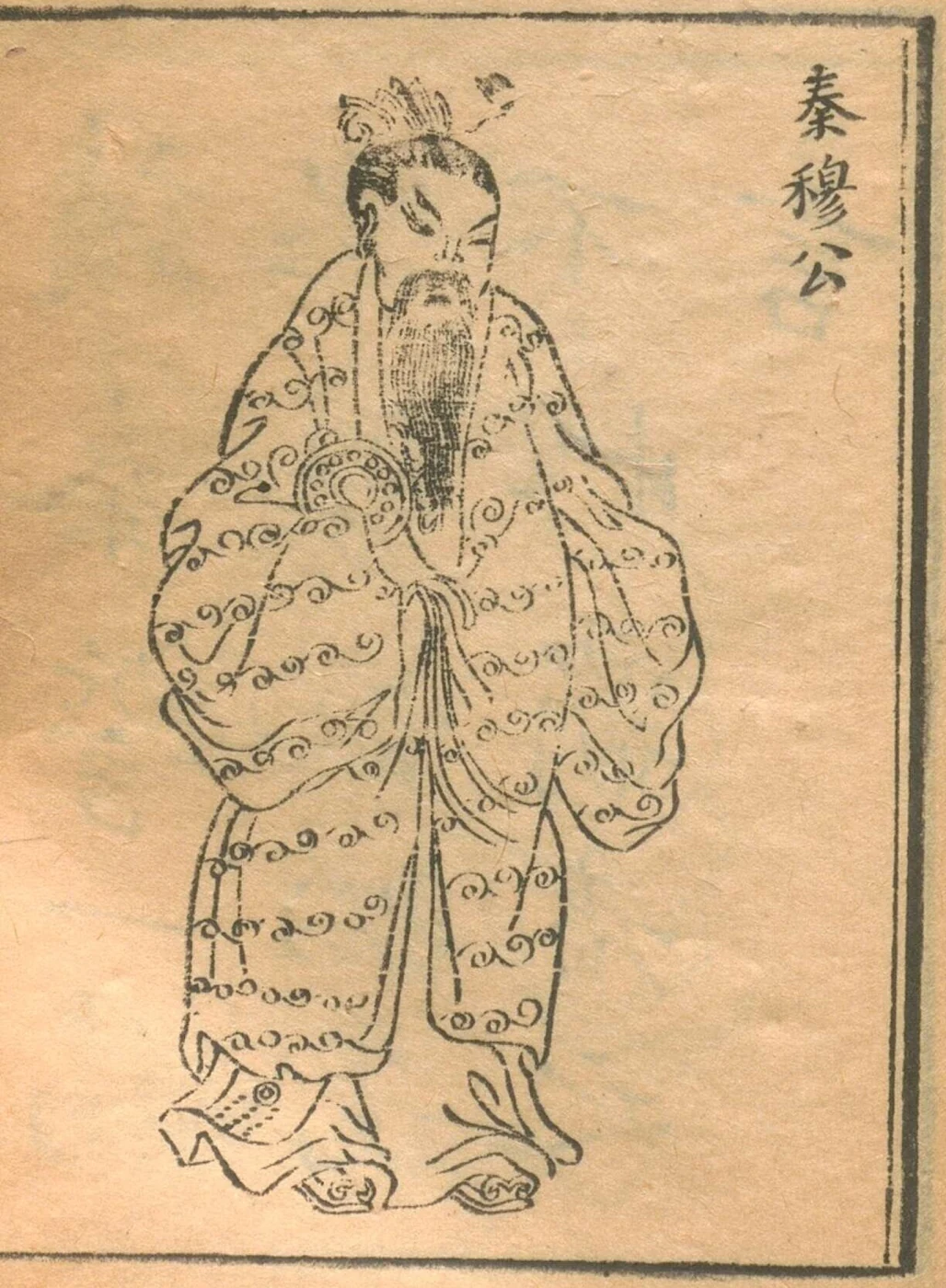
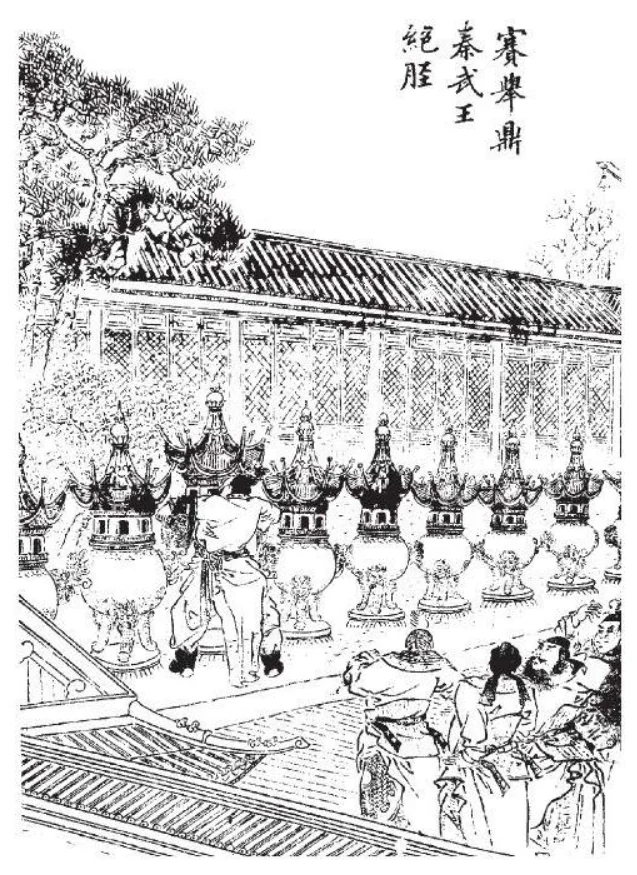
Establishment: The foundations of the Qin dynasty lay in the state of Qin during the Spring and Autumn and Warring States periods. Duke Xiao of Qin came to power in 361 BCE and employed Shang Yang to carry out two major rounds of reform. These measures emphasized military merit, collective responsibility through household groupings, and rewards for agriculture and warfare, transforming Qin from a frontier state into the strongest power of the Warring States. When King Zheng of Qin succeeded in 247 BCE, Qin had already annexed Ba, Shu, and Hanzhong, destroyed the two Zhou states, and directly controlled commanderies such as Sanchuan and Nanjun. After taking personal control of government, Zheng employed Wei Liao and Li Si and adopted a strategy of "befriend distant states and attack nearby ones" and defeating rivals one by one. Beginning with the conquest of Han in 230 BCE, Qin destroyed Zhao, Wei, Chu, and Yan in succession. In 221 BCE Wang Ben attacked Qi, and King Jian of Qi surrendered without battle, completing the conquest of the six states within ten years. In the same year, King Zheng adopted the title "Emperor" on the grounds that his virtue equaled the Three Sovereigns and his achievements surpassed the Five Emperors. He called himself the "First Emperor" and divided the realm into thirty-six commanderies, completing the transition from a vassal state to a unified empire.
Height: The years immediately following unification were Qin's period of greatest strength. Qin Shi Huang standardized institutions throughout the realm, abolished the old enfeoffment order, and implemented the commandery-county system. At the center he established the Three Lords and Nine Ministers. Commanderies had governors, military commanders, and inspectors, while counties were divided into townships, villages, and relay or policing units, creating a dense bureaucratic network. To prevent the former aristocracies of the six states from reviving regional power, 120,000 wealthy households were moved to Xianyang; weapons were collected and melted down to cast twelve large bronze figures; and fortifications and defensive river works were dismantled. Qin also standardized writing, currency through the Qin banliang coin, weights and measures, and vehicle gauges, while enforcing a strict legal order in which officials served as teachers of the law. Externally, the empire expanded while military momentum remained strong. Meng Tian led 300,000 troops north against the Xiongnu, recovered the Henan region around the Ordos, and helped construct the Great Wall. In the south, commanders including Tu Sui campaigned against the Baiyue, while the Lingqu Canal linked the Xiang and Li river systems and new commanderies such as Nanhai, Guilin, and Xiang were established. Qin also built imperial highways, the Straight Road, and the Five-Foot Road, while Qin Shi Huang made five major imperial tours and had commemorative inscriptions carved in stone. At its height, the empire covered approximately 3.4 million square kilometers.
Turning Point: In his later years Qin Shi Huang governed with increasing urgency and severity and used labor on a massive scale. In 213 BCE books were burned as part of an effort to control thought. In 212 BCE, after court magicians and seekers of immortality including Lu Sheng and Hou Sheng fled, more than 460 practitioners and scholars in Xianyang were reportedly buried or executed, producing the event remembered as the Burning of Books and Burying of Scholars. Pre-Qin texts and philosophical traditions suffered severe losses, although historical records indicate that many of those described as "Confucian scholars" were also fangshi, leading to later debate over whether the episode should instead be understood as the punishment of court magicians. At the same time, massive projects such as the Epang Palace and the mausoleum at Mount Li followed one another in quick succession. More than 700,000 convict laborers were reportedly used, while an empire of only a little over ten million people had more than two million persons engaged in military or labor service. In 210 BCE Qin Shi Huang died at Shaqiu during an eastern tour. His son Hu Hai succeeded him as Qin Er Shi. Qin Er Shi relied on Zhao Gao, killed ministers and imperial princes, increased taxation and corvée, and applied the law with even greater severity, bringing social conflict close to explosion.
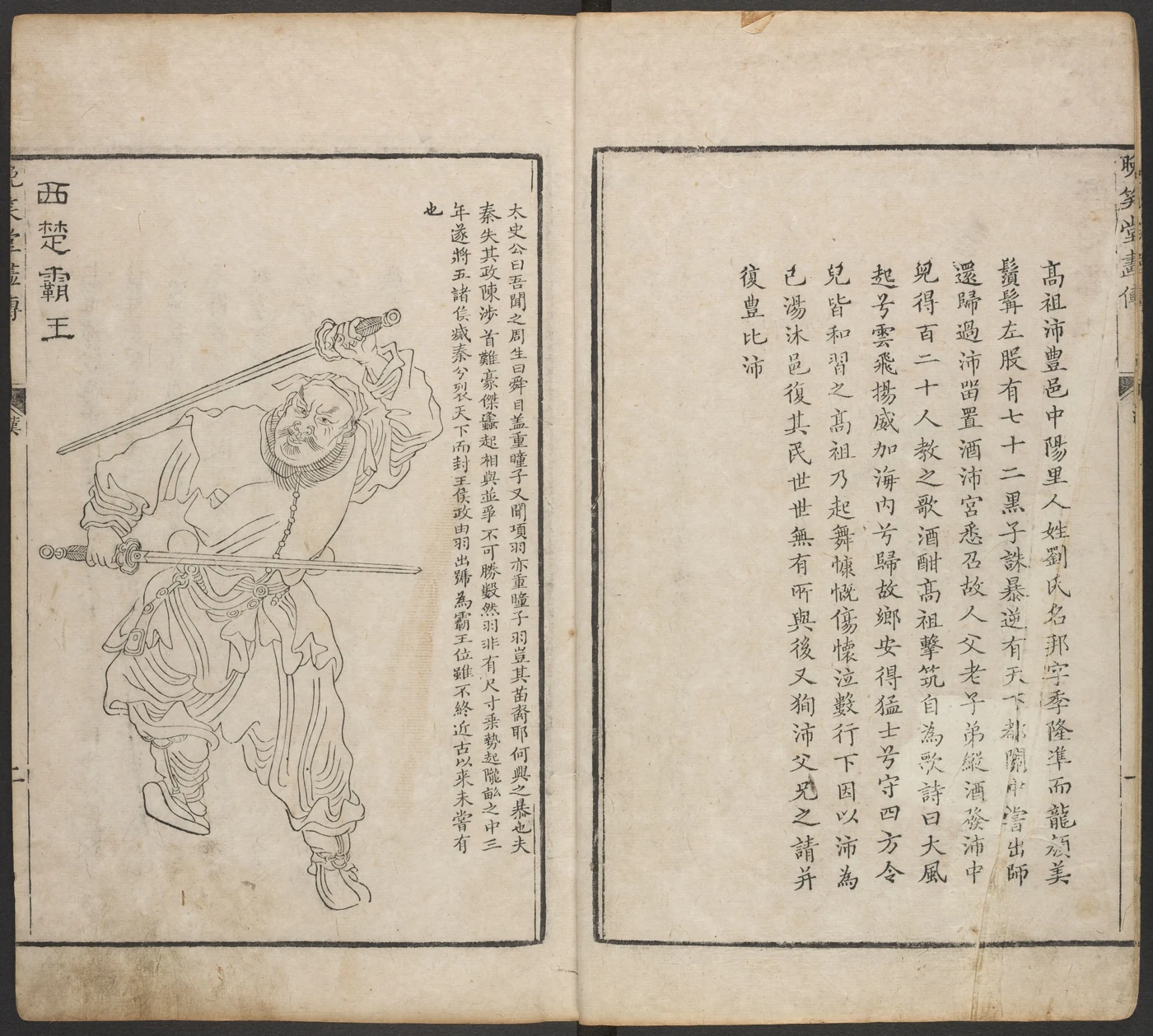
Decline: In 209 BCE, 900 conscript soldiers from the poorer registered households, being sent to garrison Yuyang, were delayed by heavy rain at Dazexiang and faced punishment for failing to arrive on time. Chen Sheng and Wu Guang therefore launched an uprising and established the regime they called Zhang Chu. The revolt became the first large-scale peasant rebellion in Chinese history. Rebellions spread rapidly, while aristocratic forces connected to the former six states also revived. Xiang Yu and Xiang Liang rose in Jiangdong, and Liu Bang began his uprising in Pei County. Although the initial rebellion weakened after Chen Sheng was killed, anti-Qin movements had already spread across the eastern regions. Qin general Zhang Han mobilized convict laborers from Mount Li and defeated several rebel forces, but as the main Qin armies under Wang Li and Zhang Han campaigned east, the Guanzhong heartland became increasingly exposed.
Fall: In 207 BCE Xiang Yu decisively defeated Qin forces at the Battle of Julu and captured Wang Li. Zhang Han then surrendered with approximately 200,000 troops, leaving Qin without most of its main field army. At the same time Liu Bang advanced west through Wuguan, took Lantian, and encamped at Bashang. Fearing Liu Bang, Zhao Gao ordered Yan Le to kill Qin Er Shi at Wangyi Palace. Zhao Gao intended to take power himself, but his supporters lacked sufficient backing and the court opposed him, so he installed Ziying, described as Qin Er Shi's elder brother or, in another account, his nephew. Ziying abandoned the imperial title and returned to the title King of Qin. Before taking power he had already plotted with his two sons and soon killed Zhao Gao. In the tenth lunar month of the same year, Ziying, King of Qin surrendered to Liu Bang by the side of the road at Zhidao. Liu Bang entered Xianyang, and the Qin regime ended. Xiang Yu later entered the passes, killed Ziying, and burned the palace buildings at Xianyang, after which the struggle between Chu and Han began.
Politics and Institutions
Qin created a centralized political system in which the emperor was the supreme ruler. The emperor used the first-person pronoun reserved for the sovereign, issued formal commands and edicts under distinct categories, abolished posthumous naming for the imperial succession, and intended that rulers follow one another numerically as First Emperor, Second Emperor, Third Emperor, and so on, while concentrating civil and military authority in the throne. At the center, Qin used the Three Lords and Nine Ministers system. The Grand Councilor managed civil administration, the Censor-in-chief supervised officials and also acted as deputy to the Grand Councilor, and the Defender-in-chief was responsible for military affairs, although the office was not always filled. Beneath them stood offices including the Chamberlain for Attendants, Commandant of Justice, Director of Guests, Chamberlain for Ceremonials, Minister of the Imperial Clan, Superintendent of Agriculture, and Privy Treasurer. These offices were separately responsible to the emperor. At the local level, Qin implemented the commandery-county system, replacing the Zhou-era pattern of hereditary regional rule. Commanderies had governors, military commandants, and inspectors; counties had magistrates or chiefs, commandants, and assistants; below them were townships, villages, and relay or policing units. Major officials were appointed by the central government. Military mobilization used bronze tiger tallies, keeping the ultimate authority to deploy troops in the emperor's hands.
Qin embraced Legalist thought and used Han Fei's concepts of law, technique, and authority as governing principles. Its laws were numerous and severe. The excavated Yunmeng Qin documents preserve legal statutes, explanations, and case records. Punishments included death, corporal penalties, beating, penal labor, exile, shaving and related status punishments, fines, redemption of punishment, collective responsibility, and penalties involving entire kin groups. Household registration and mutual responsibility were used to organize the population. Qin also adopted the Five Phases theory of dynastic succession, identifying itself with the phase of Water, favoring black, treating six as a ritual number, and beginning the year in the tenth lunar month. These practices were used to sacralize imperial authority and to argue cosmologically that Qin, as Water, had succeeded Zhou, associated with Fire.
Military and Diplomacy
Qin's military institutions grew out of Shang Yang's Reforms. The twenty-rank order awarded rank and land according to military merit, creating a highly martial political culture sometimes described as a state centered on obtaining enemy heads for merit. Qin maintained capital troops, commandery and county forces, and frontier garrisons. Its armed forces included chariot, infantry, cavalry, and naval or tower-ship units, with infantry as the core and chariots and cavalry as supporting arms. Troops used crossbows together with bronze spears, dagger-axes, swords, halberds, and other weapons. The combined chariot, cavalry, and infantry formations represented by the Terracotta Army are a major material expression of Qin military organization. After unification, Qin continued territorial expansion with simultaneous campaigns to the north and south.
Before unification, Qin's principal military opponents were the six other Warring States powers, which it destroyed in succession. After unification, its main campaigning targets were the Xiongnu and the Baiyue. In the north, nomadic groups such as the Xiongnu and Donghu were regarded as major threats. In 214 BCE, the thirty-third year of Qin Shi Huang, Meng Tian led 300,000 troops north, drove back the Xiongnu, recovered the Henan region, established Jiuyuan Commandery, and connected earlier walls built by Yan, Zhao, and Qin from Lintao in the west to Liaodong in the east, creating the defensive system remembered as the Great Wall. In the south, Qin armies under Tu Sui, Ren Xiao, Zhao Tuo, and others campaigned repeatedly against Baiyue groups including Minyue, Nanyue, Xi'ou, and Luoyue. The Lingqu Canal linked the Yangtze and Pearl River systems, and Nanhai, Guilin, and Xiang commanderies were established. The regime also pursued policies described as pacifying the Baiyue and settling among Yue communities. Qin further built the Five-Foot Road to connect with the southwest and constructed major imperial highways and the Straight Road radiating from Xianyang to strengthen control over distant regions.
Economy and Commerce
Qin emphasized agriculture and restricted commerce, continuing Shang Yang's policies by rewarding farming, textile production, and military merit. It implemented systems of land allocation and required registered commoners to declare their holdings, recognizing private landholding on an empire-wide basis. Government granaries and specialized officials managed grain storage. Qin also unified weights and measures and currency. The various coinages of the former states were abolished, gold was treated as the upper currency, and the round coin with a square hole known as the Qin banliang became the standard lower currency. Weights and measures were standardized using measures derived from Shang Yang's reforms, with strict legal tolerance for deviations, greatly facilitating the movement of goods across regions.
Commerce nevertheless faced extensive restrictions. Market rents and customs duties were high, merchants were entered into separate registers, and bankrupt merchants could be reduced to government servitude, leaving relatively little room for independent commercial activity. Salt, iron, and other sectors were placed under official control. At the same time, standardized currency and measures and the construction of land and water transport networks objectively created favorable conditions for exchange. Xianyang was the sole great metropolis of Guanzhong and the empire's largest commercial center, while Chengdu, Tao, Linzi, Wan, Shouchun, Panyu, and other cities were important markets. Imperial roads and river transport connected cities and commercial centers across the empire. Qin taxation and extraction were extremely heavy, and the burden of taxes and labor far exceeded what many households could bear. The resulting contrast between a wealthy state and an impoverished population became an important cause of the dynasty's rapid collapse.
Culture and Society
Legalism dominated Qin political ideology, supplemented by concepts drawn from yin-yang and Five Phases thought. The government promoted the principle that officials should serve as teachers and severely restricted private learning, attempting to standardize the customs of the former eastern states under Qin norms. Standardizing writing was one of Qin's major cultural projects. Qin Shi Huang ordered Li Si to simplify the earlier Qin script into Small Seal Script for empire-wide use; clerical script was later systematized in the tradition associated with Cheng Miao. The transition from seal to clerical forms was a major stage in the evolution of Chinese writing and had long-term importance for later script traditions. Qin also produced elementary texts such as *Cangjie*, *Yuanli*, and *Boxue*. Many commemorative stone inscriptions, including those at Mount Tai, Langya, and Kuaiji, were associated with Li Si and became early examples of monumental inscriptional writing.
Socially, Qin used five- and ten-household collective responsibility units and household registration to exercise close control. Five households formed a wu and ten a shi, with mutual surveillance and mandatory reporting, while family division was encouraged or enforced. Religious practice included worship of Heaven, ancestors, mountains, rivers, spirits, and deities, together with older traditions of shamanism, divination, and astrology. Qin Shi Huang also strongly believed in the techniques of fangshi seeking transcendence and immortality and sent Xu Fu and others eastward across the sea in search of an elixir of life. Dress and ritual followed Qin's association with the Water phase and preference for black. Although cultural life was constrained by ideological control, the court absorbed musical and performance traditions from the former six states, and official musicians managed music, dance, and entertainments. Finds such as dragon-patterned hollow bricks from the Xianyang palace sites demonstrate high craftsmanship, while the sculpture, bronze work, and metallurgy represented by the mausoleum of Qin Shi Huang and the Terracotta Army reached an exceptional technical level.
Key Figures
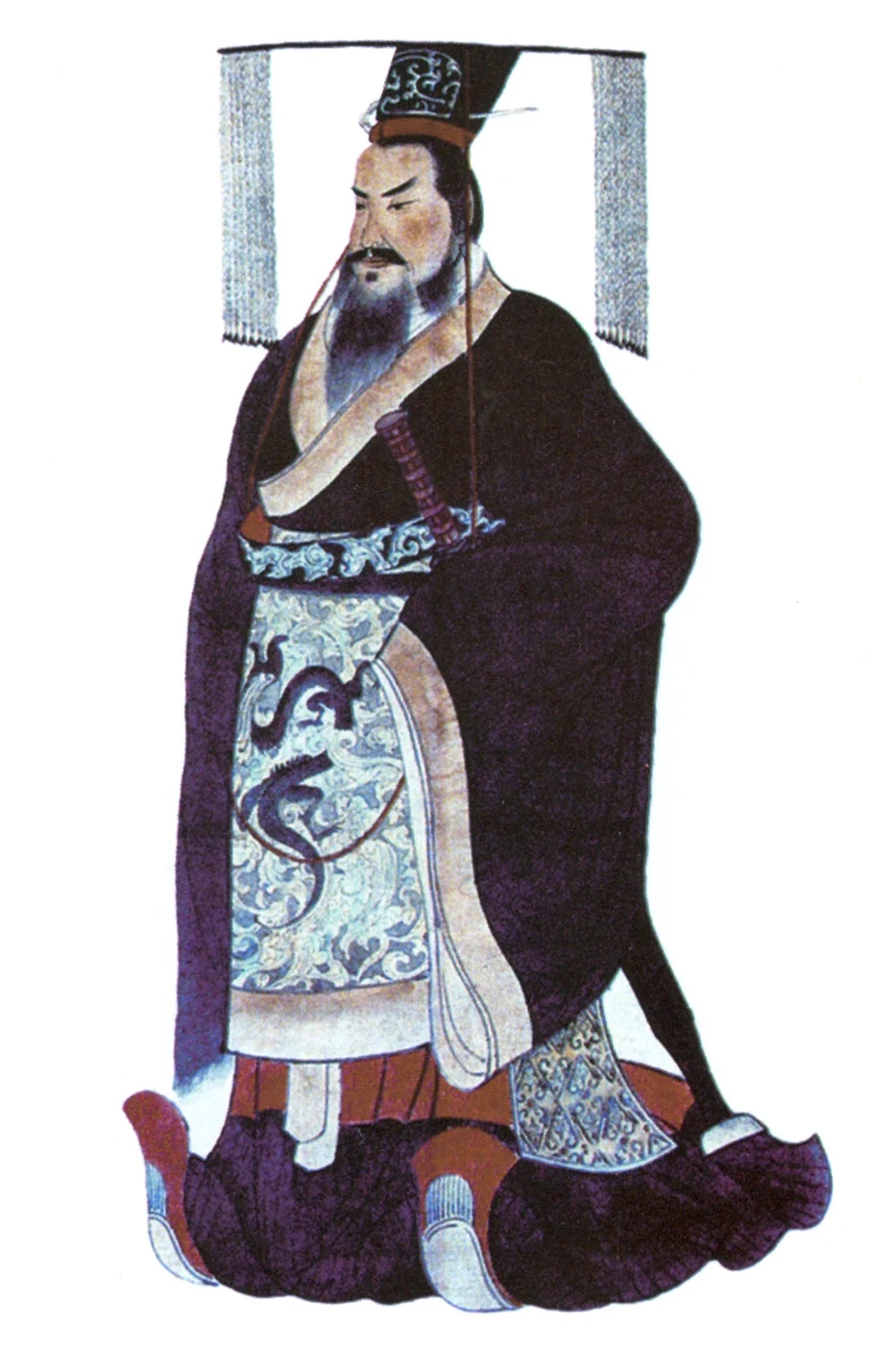
Qin Shi Huang, Ying Zheng (259–210 BCE): Founding emperor of Qin. He became King of Qin in 247 BCE and emperor in 221 BCE, personally directed the creation of the imperial system, commandery-county administration, and writing standardization, campaigned against the Xiongnu in the north and conducted the Campaigns against the Baiyue in the south, and brought Qin to its height. Severe punishments and heavy labor demands in his later reign also contributed to the conditions behind Qin's rapid collapse.
Qin Er Shi, Hu Hai (230–207 BCE): A younger son of Qin Shi Huang who succeeded in 210 BCE after the Shaqiu succession crisis. Dominated by Zhao Gao, he killed ministers and imperial princes and ruled harshly, accelerating the collapse of the regime before being killed on Zhao Gao's orders.
Ziying, King of Qin: The last ruler. After Zhao Gao killed Qin Er Shi, Zhao Gao initially intended to seize the throne but, facing opposition, instead installed Ziying. Ziying abandoned the imperial title and again styled himself King of Qin. Before taking power he had already conspired with his two sons to kill Zhao Gao, whom he soon executed. In 207 BCE he surrendered to Liu Bang, ending Qin rule.
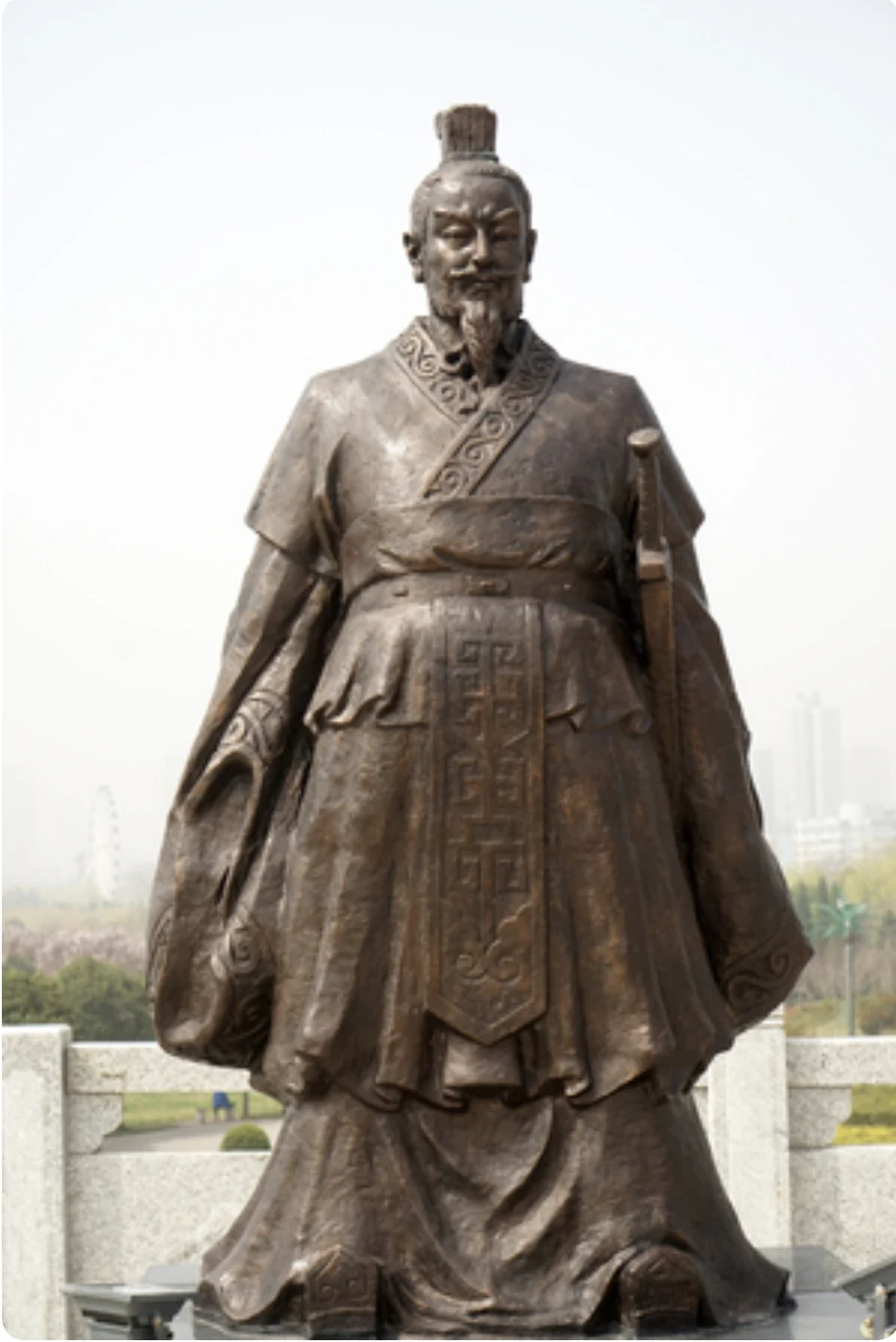
Li Si: A native of Chu who entered Qin service late in the Warring States period. He served as Commandant of Justice and Grand Councilor, advocated abolishing regional enfeoffment in favor of commanderies and counties, and directed the standardization of writing and measures. Late in his life he was framed by Zhao Gao and executed in Xianyang in 208 BCE together with the punishment of his kin.
Zhao Gao: A powerful eunuch at the Qin court who monopolized political authority, was associated with the episode known as "calling a deer a horse," engineered the death of Grand Councilor Li Si, and ordered the killing of Qin Er Shi before being executed by Ziying.
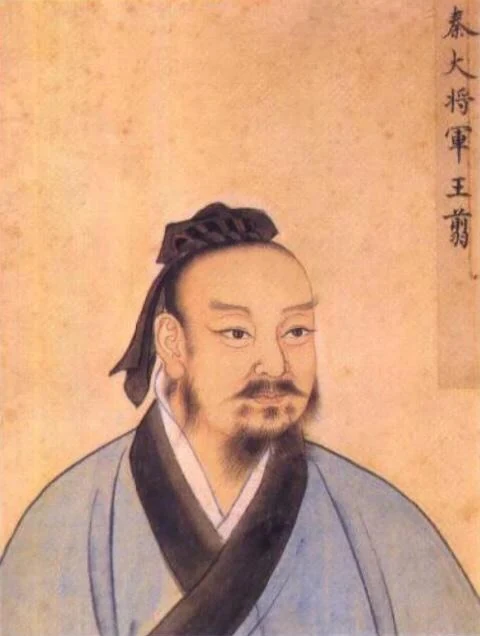
Wang Jian, Meng Tian, and Zhang Han: Wang Jian, who led 600,000 troops in the conquest of Chu, was one of the outstanding commanders in the wars of unification. Meng Tian drove the Xiongnu north, built frontier walls, and defended Jiuyuan. Zhang Han used convict laborers to suppress rebel forces in the late Qin, became one of the major commanders of the dynasty's final years, and eventually surrendered after defeat in the campaigns surrounding Julu.
Rulers and Political Leadership
Ying Zheng (Qin Shi Huang), Hu Hai (Qin Er Shi), Ziying (usually styled King of Qin; whether he should be counted as an emperor depends on the historical convention used).
> This section explains the position of rulers in the evolution of the regime; complete biographies are provided in the corresponding person entities.
Major Events
Shang Yang's Reforms (356 BCE and thereafter): Established institutions centered on agricultural and military production, military-rank rewards, and mutual responsibility units, providing the fundamental basis for Qin's rise from weakness to strength.
Qin's wars of unification (230–221 BCE): Qin conquered Han, Zhao, Wei, Chu, Yan, and Qi in succession and unified the Central Plains.
Adoption of the imperial title and commandery-county administration (221 BCE): The title "Emperor" was established, hereditary enfeoffment was abolished on a broad scale, the realm was divided into thirty-six commanderies, and the centralized imperial system took shape.
Standardization of writing, vehicle gauges, weights and measures, and currency: Qin promoted Small Seal Script, the Qin banliang coin, and standardized legal measures, creating common conditions for economic and cultural integration.
Northern campaigns against the Xiongnu, Campaigns against the Baiyue, construction of the Great Wall, and excavation of the Lingqu Canal: These policies expanded and consolidated Qin's frontiers.
Burning of Books and Burying of Scholars (213–212 BCE): Classical and philosophical writings were destroyed, and more than 460 fangshi and scholars were reportedly executed or buried, representing an extreme form of ideological control. Historical sources also indicate that many of the victims described as scholars were fangshi, and the exact character of the event remains debated.
Shaqiu succession crisis (210 BCE): Qin Shi Huang died, and Hu Hai, Zhao Gao, and Li Si used forged or manipulated imperial orders in the succession, contributing to political disorder.
Chen Sheng and Wu Guang uprising (209 BCE): Chen Sheng and Wu Guang raised the first major anti-Qin rebellion, triggering responses throughout the empire.
Battle of Julu (207 BCE): Xiang Yu destroyed the main Qin field forces after committing his army to a decisive battle, making the dynasty's collapse effectively irreversible.
Ziying's surrender to Liu Bang (207 BCE): After killing Zhao Gao, Ziying, King of Qin surrendered at Xianyang to Liu Bang, bringing the Qin regime to an end.
Historical Assessment and Legacy
Contemporary views: Qin was seen as having created an unprecedented order in which "all under Heaven was organized into commanderies and counties, and laws and commands issued from a single authority." At the same time, ordinary people resented its harsh laws and heavy labor demands, and later sayings portrayed the uprising of conscript soldiers as the spark that brought the passes into rebellion.
Later views: Later assessments have usually been divided. On one hand, Qin was the first unified, centralized, multiethnic empire in Chinese history. Its imperial institution, Three Lords and Nine Ministers system, and commandery-county administration established basic structures used by later governments for more than two millennia. Standardized writing, vehicle gauges, measures, and law promoted empire-wide integration, while the transition from seal to clerical script had a lasting influence on the Chinese writing system. The Qin concept of political unity became a major element of later Chinese political and cultural identity, and the Great Wall, mausoleum of Qin Shi Huang, and Terracotta Army became emblematic legacies of Chinese civilization. On the other hand, historians have consistently emphasized Qin's harsh punishments, heavy taxation and labor obligations, urgent and coercive government, and failure to conserve the strength of the population. Its collapse after fourteen full years, or about fifteen by inclusive reckoning, became a lasting historical warning about losing the realm through oppressive rule. The experience influenced the Han and later regimes toward comparatively more moderate governance while retaining a combination of Confucian moral language and Legalist administrative techniques. Qin therefore fell early but profoundly shaped the subsequent course of Chinese history through institutional construction and cultural integration.